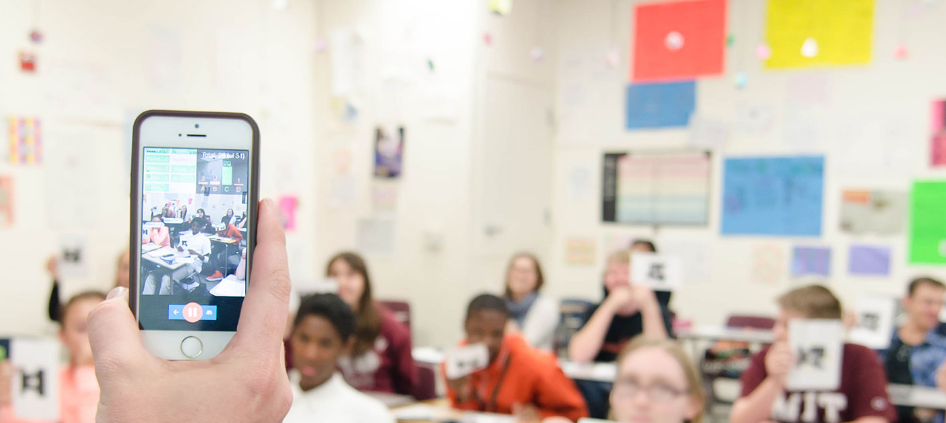
In this year of continued chaos caused by the pandemic, teachers are finding that through routines, they can reinforce and review skills from previous grades. They are also able to use routines to preview skills that might not be coming until later in the year. So many free, well-designed routines are out there for teachers to use that it is easier than ever to find one that meets our students' needs.
Low-floor, high-ceiling routines are wonderful for engaging all students, and they usually involve a visual that helps students to all be able to "step-in" to the learning. Favorite examples of these types of routines include Which One Doesn't Belong and Same/Different. Teachers and students alike enjoy these routines because there are so many possibilities within one routine as they allow students to make sense of the problems in ways that make sense to them.
Many of the routines from Steve Wyborney are also loved by teachers and students. These routines contain visuals, offer great exposure to vocabulary, and build number sense. Teachers love them because they are professionally made and easy to use, and students love them because they are fun!
Of course, Number Talks also are a routine that helps to build student discourse and fluency. Using the book as a guide for these helps students to develop and use strategies when they are ready. Doing Number Talks regularly has been shown to grow student fluency and flexibility in computation.
As students become more familiar with routines, there are many ways teachers can tweak the format. For example, they might decide to have students create their own following a favorite routine. (Creating your own Which One Doesn't Belong isn't as easy it might seem.) Students can create these routines and share them with other classrooms besides their own giving them a larger audience for their work. Teachers might also use routines as a daily warmup such as revealing one clue a day to an Estimystery and then discussing the students' thinking at the end of the week. I've even seen teacher print out images from routines and have students discuss them as they wait outside of a special class like PE or music. A routine image might be part of a weekly newsletter so that families can discuss it together. There are many ways that these routines can be used throughout a day's learning in addition to a warmup for math block.
All of these math class routines help to build a strong classroom culture of open, flexible thinking. They also strengthen students' number sense and confidence while expanding their math vocabulary. Teachers gain better insight to student development and can use these routines to help determine what next steps to take instructionally. They see quickly how students grow through the use of routines that meet their student needs; the routines may change from year to year.
Math routines help us to build mathematicians whose confidence help them to take on the math practice standards as part of who they are.