Showing posts with label SMARTBoard. Show all posts

Tuesday, November 29, 2022

Mathigon & Polypad & Puzzles...Oh My!

I have been a fan of Mathigon's Polypad for quite a while now, and have found many great ways for it to be used to help students build better mathematical understanding as well as to challenge their current understandings.

I want to share a few of the great resources available on Mathigon in hopes that you will find ways for them to work for you and your students!

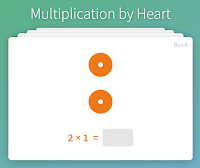
The Multiplication by Heart cards (created by Math for Love) are great visual practice for students as they learn to understand and master their multiplication facts.  

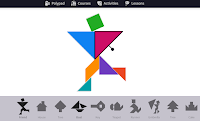
Of course, I also enjoy the Tangram  Builder which is located in the Activities section.

Exploding Dots can also be found here.  If you have not spent time in the Exploding Dots world by James Tanton, do yourself and your students a favor!  It would make for a great exploration for your students.  The Exploding Dots experience on Mathigon is an extension of the actual website, but still one to get you thinking.


What really got my attention on Mathigon is its Polypad section!  It has so many unique manipulatives and tools to offer your students.

This polypad includes a balance scale and fraction bars. Each could be used separately.


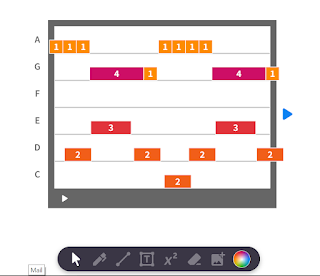
Students can make music using these tools found in Polypad.


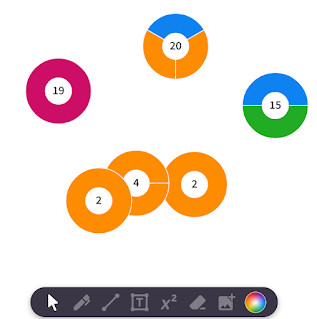
These Prime Factor Circles are a match to Prime Climb and can be decomposed (if composite) or combined as you wish to create new products.


This is just the tip of the iceberg in this fabulous site.  You can save and link activities that you make within the Polypad, but you can also use some of the many that are already prepared.  One last thing to explore is the Lessons tab.  Inside of there you will find your way to a variety of puzzles and explorations for you and your students.

Take the time for your students and yourself to explore this site.  You won't be disappointed!


Wednesday, November 29, 2017

Holiday Math Online Games

Here some holiday/winter based online math games you might want to try:


Christmas Math:  (K-2)  This site works on identification of numbers, counting, as well as facts within 20.


Math Mosaics: (K-2)  Children solve problems under 10 to color in the squares of the winter mosaic.


Holiday Fun:  (3-5) A multiplication practice game.  Students can choose fact family they want to practice.  Correct answers create a holiday scene.


Blocky Christmas:  (3-5) Logic puzzle from ABCya


Christmas Lights:  (K-5)--Students select the difficulty of basic facts to practice.  They are rewarded at the end with lights to decorate the holiday scene. Students love ABCya!


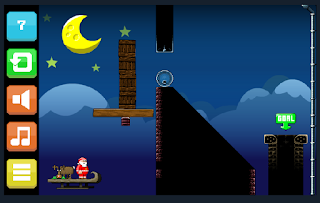
Super Santa Kicker: (K-5) Students use their knowledge of angles and simple machines to help the reindeer kick the stuffed Santas into the goal.


Winter Math MunchMan: (K-5) Students can choose what level of problems that they want to solve.  Then they move through the Pacman maze to capture the answers and beat the ghosts.


Create your Own Snowflake:  (K-5) Students use digital scissors and paper to create a symmetrical snowflake.

Snowline:  (K-5) Students use angles to direct Santa to the finish line.


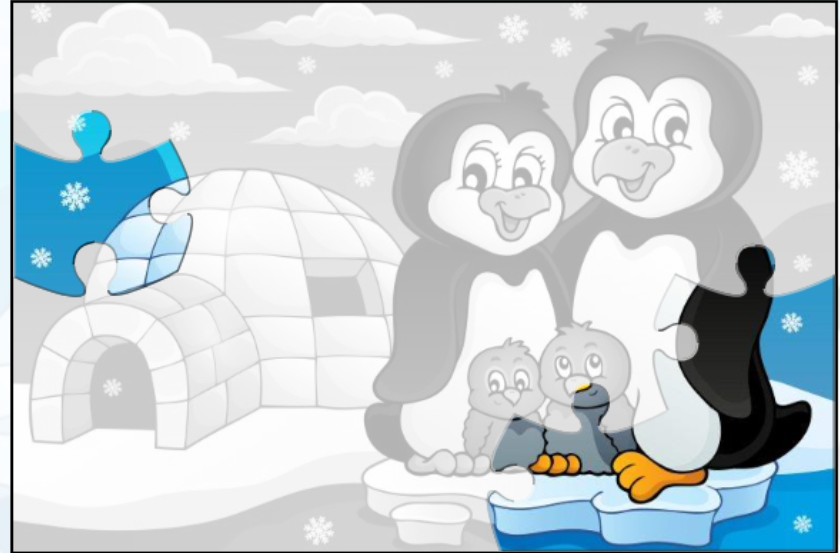
Winter Jigsaw Puzzles:  Students put together digital jigsaw puzzles.


Wednesday, November 8, 2017

Rekenreks--Ideas for use

The rekenrek is showing up more and more in our classrooms.  Hurrah!  They are great tools for us to use to help our students build number sense.  It is also a nice concrete way for students to model what they are thinking.

Christina Tondevold is an educator who provides great professional development for teachers.  She calls herself the Recovering Traditionalist and often discusses her transformation as a math educator.  She recently did a vlog post about her top 5 ways to use the rekenrek.  You can find it here.  It is only about 12 minutes and totally worth your while.

Here are her Top Five Ways to Use the Rekenrek:

5.  PLAY--Just let the students play and discover on the rekenrek independently.

4.  NUMBER STRINGS--Build student understanding through number strings talks.

3.  QUICK LOOKS--Grow students' subitizing skills through quick looks on the rekenrek and discussion afterwards.

2.  SHOW ME--Giving the students prompts and seeing the different ways that they "show me eight."

1.  MODELING STORY PROBLEMS--Having students use this concrete tool to help them make sense of story problems they encounter.


I have shared with many of you an online version that works well on the SMARTBoard.   Here is a link to that site.  You might even want to make it a tab in Chrome so that it is always handy!

It is a good idea to try to build in times when students take their concrete representation on the rekenrek and make it pictorial.  You can find many examples of rekenrek recording sheets online.  Beware, however!  This is much more difficult for young students to do than expected, but a great way to build their understanding.

Finally--I'll end with another great video about the rekenrek by Graham Fletcher.


Let me know if I can help in any way!

Tuesday, October 3, 2017

One More,One Less

In a recent meeting with our building interventionists, they shared their concerns about students in upper grades who cannot count backwards--especially when they have to cross a ten (42, 41, 40, ?).  I have found a similar problem in a number of the Firsties that I work with.  These students can rote count, but they aren't always sure of the meaning of "before," "after," "one more," or "one less."

This lack of number sense is concerning, but I think we can find ways to strengthen our students' understanding through continued practice and modeling.  I have created this SMART Notebook resource as a way to help us meet this problem head on.  If this is a problem you know that some of your students face, you might be able to use this document in small group, or as a class warm-up every now and then.

Counting backward and understanding the relationship between consecutive numbers would fall into one of our Essential Skills.  Please share in the comments below if you have other ways to help build this understanding in our students.

Monday, June 12, 2017

Growing problem solvers


By 5th grade, many students have figured out how to solve story problems.  Other students remain completely dependent on teacher models and key words.

Teaching kids to follow a model or to look for key words sounds good, but is it really teaching them how to solve problems?  In reality, it is probably only teaching them to solve problems that are presented in the exact same format.  This distracts from the real-world element needed in our math instruction.

A great idea I have heard of recently involves presenting the story problems as a reading situation.  Present the problem with the numbers covered up, and ask the students to visualize what is happening and determine what they are to do with those numbers before even knowing what the numbers are.  This causes them to "make sense" of the problem before they begin manipulating numbers.  It is a great strategy, and one that is used in most 3 Act Tasks.  

This SMART notebook was created with this idea and CCSS 5.MD.1 in mind.  The problems were found in various places, but the notebook presents them all in a format with the numbers covered.   This should allow for classroom collaboration and discussion before students solve the problems.  After discussion, you can reveal the numbers by clicking on the white boxes.  I did not create it thinking that a person would do all of the pages at one time or in the order presented;  you can use these notebook pages however you wish, as they vary in difficulty and measurement units.  

 To go along with the notebook, I created problem labels.  Each page of the labels go with a page in the SMART notebook document.  You can just print and peel the labels (Avery 18662) to hand  to the students to complete independently or with a partner in their math notebooks.

Good luck!  


Friday, December 2, 2016

For the Holidays

It's that time of year again....we are busy, our students are busy, and we still have a lot of work to do.  :)

Attached are two holiday SMART documents.  You are welcome to use them in your room as you wish.  Maybe you take a page or two a day...maybe there is only one page that interests you....maybe you want to save them for those final days before break....whatever you choose, I hope you find some use of them.

Each contains a couple logic puzzles.  I like to give kids little manipulatives to help them solve the puzzle, so I made a doc for you that you can print and use if you wish.

Have a great December!  I love being in the classrooms--let me know if you could use anything!

K-2 Holiday SMART

K-2 Logic puzzle images

3-5 Holiday SMART

3-5 Logic puzzle images


Monday, October 3, 2016

October means Halloween


Check out these SMART Notebook docs for some fun review this month!  Because multiple grade skills are covered--use the pages that work for you!

Grades K-2

Grades 3-5

Please feel free to share with a friend.  I didn't make the really cute K-2 one; I found it and just made a few edits.  :)

Saturday, September 24, 2016

Plickers--Have you tried them?


Hopefully, you have heard about Plickers.  If not, go to the website to learn more.

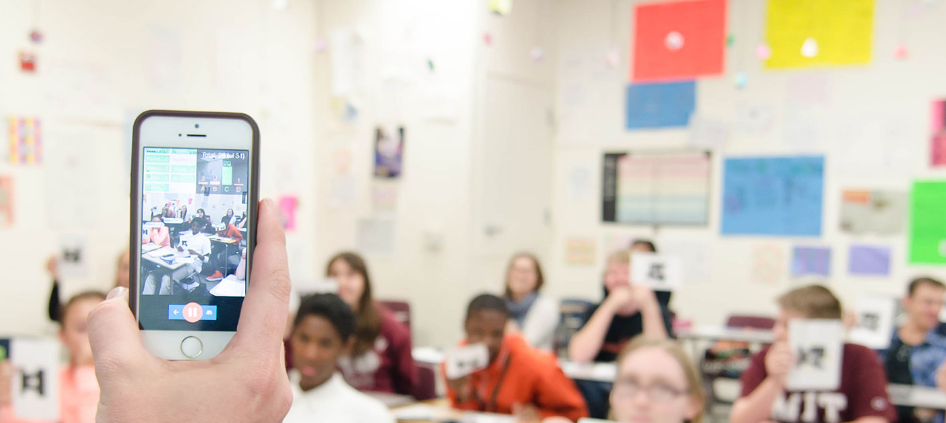
Plickers are cards that students use to respond to multiple choice questions presented by you on the SMARTBoard.  Once the child has an answer, you use your smartphone or Ipad to scan the room and "pick up" their answers.  Each person's card is individualized so that they can't compare it to someone else's for a right answer.  Individualization also helps you to see who is getting the right answer and who isn't.

The site will tell you how many had the right answer for each question both at the time and after you are done.  You feed the program the questions you want to ask.  You can ask all of the questions at once, or you can just ask one or two to get feedback on the day's lesson.

Last year, when I used this site, I emailed the Plickers people to ask if teachers could share question sets.  They told me that capability would come in the near future.  It looks like to me that it is not ready for that yet.  However, if you create a question set in word, then other people who want the questions just need to copy and paste it into their own account to use it.  Once the question set is in, the questions can be used as often as desired.

Your IMC specialist should be able to help you with this program if you would like, but I am also happy to help you figure out ways to use this in your math class.

I have made a question set for U2--4th grade, U2--1st grade, U3--2nd grade, and U3--5th grade.  You can copy and paste these into your Plicker account to use if you wish.  Good luck!

U2 Plickers--1st grade

U2 Plickers--4th grade

U3 Plickers--2nd grade

U3 Plickers--5th grade


Sunday, September 18, 2016

Make Ten Resources


Making ten is  an important addition strategy for primary grades.  Here are some resources to help your students comprehend the concept as well as develop some automaticity of facts.  When working on facts, always try to have your students first involved concretely, then pictorially, then numerically/abstractly.  Fact fluency involves good understanding of the concept--not just rote memory. I have labeled each activity with a C, P,or an A.  

Most of these would make great math stations! (Many of the examples have links to PDFs, SMART Notebooks or other things you might need)

This picture shows a life-size idea for ten frames.  You might also consider having your students stand in the spaces of the ten frame for a more kinesthetic experience.  Dr. Nicki recommends using a shower curtain and duct tape.  I have found that plastic tablecloths hold up pretty well to kiddos standing/walking on them, too.   C


Number Bowling:  This game comes from What the Teacher Wants.  Students bowl the tennis ball and then figure out the combination that made 10.  I think you could play it with an addition or subtraction number sheet. Here is a recording sheet to help with subitizing and recording their game. C


Make Ten Bracelets:  This idea comes from Kindergarten Doodles.  You could use pipe cleaners as bracelets or beaded number lines of ten... C


Ten Frames Puzzles:  These ten frame puzzles are from FirstGradeTeacherLady.  P


Visualizing/Modeling Template:  This template has kids show the fact in a variety of ways.  Maybe you make a book of them for Make Ten facts...P


Make Ten games:  This doc contains three different "games" for making ten.  Each game requires a 10 sided die.  They can be played as an individual or with a partner.  A (but could be Concrete if you provided manipulatives)

Number Bonds Game: I have shared the number bonds link before, but this one focuses on making ten.  A great online challenge.  A

This video uses pictures, numbers, and music to teach.  P  

SMARTBoard Games: This doc has two different pages that you could use as a whole class to practice Make Ten Facts.  A

Once you think that a fact strategy has been conceptualized, try it out with story problems. This page is a start to some Make Ten story problems for your children to solve.  Consider including manipulatives and encourage drawings or number lines to show their thinking! P/A

In the end, our goal is to help kids see the relationship between a number and ten.  If you are interested in using subitizing in your classroom in a more systematic way, consider registering for these 3 free videos for some great professional development.  You can do them at a time that works for you. They are presented by Christina Tondevold, the Recovering Traditionalist.

If you have a colleague you think would like this post, please share. Do you have other ways you work to teach Make Ten facts?  Share in the comments.  :)

Saturday, September 10, 2016

Show me the Money!


With the adoption of the CCSS, we are finding that some skills do not come up as often in our new curriculum.  Many grade levels have no standards for money.  This does not mean that it should be ignored at these levels--in fact, we need to work together to find some ways to integrate money into our games and activities at every level. 

In the CCSS, 2nd grade is the first grade with a specific standard that focuses on money.

2.MD.8:  Solve word problems involving dollar bills, quarters, dimes, nickels, and pennies, using $ and ¢ symbols appropriately.

The next time we see mention of money in the CCSS is 4th grade.
4.MD.2:  Use the four operations to solve word problems involving distances, intervals of time, liquid volumes, masses of objects, and money, including problems involving simple fractions or decimals, and problems that require expressing measurements given in a larger unit in terms of a smaller unit. Represent measurement quantities using diagrams such as number line diagrams that feature a measurement scale.


EM4 does present problems with money at different grade levels, but students are expected to have mastery of counting and writing money by the end of 2nd.  We are finding that all students are not achieving mastery by the end of Grade 2.

I know that you do a lot with money already, but I also know that you are busy teaching the standards for your grade level and that money is not as prevalent in EM4 in grades other than 2nd.  Here are some ideas and resources to encourage more work with money in our classrooms which should be able to meld into your grade level's standards.  Please  add more ways that you integrate money into your students' learning in the comments at the bottom of this post.


IDEAS:
K-2:
+Use coins in your calendar work.
+When teaching counting by 5's, have students use nickels so that they make the connection between coin and its value.
+Have students  use coins as objects while learning tally marks or sorting.
+Play games that work on identification and values of coins. 
+Use coins as playing pieces in games.  
+Label your math groups as the pennies, nickels, dimes, and quarters.
+Make parents aware of the need to expose their children to coins and their values.

3-5:
+Use story problems which involve the use of money.
+Use coins to represent multiplication and division facts.
+Use coins and bills to represent place value.
+Use coins to represent fractions and decimals.

++There are many books that involve money in our math literature resources we received last year as well.

ADDITIONAL RESOURCES:
These resources from EngageNY are very good.  I think they are good to use for extra practice and some enrichment.  They are leveled by grade, but some of them could be used in more grades than the intended one. (EngageNY has great modules for all CCSS skills--these just have money as their primary focus.)

Grade 1:  Identify and Decompose P, N, and D  Identify and Decompose Q    More identify coins   Count on using pennies    Use P and D to represent numbers to 120  Adding 10s and 1s

Grade 2: Problems with money

Grade 4: Money as decimals    Problems with money

Grade 5:  Patterns using money


GAMES/PUZZLES:

Fiddlesticks: Glue images of coins or play coins onto the ends of tongue depressors.  Label on the end of one of the sticks, write BANKRUPT.  Sticks go into a plastic cup with the coins at the bottom of the cup.  Students take turns pulling a stick and identifying the coin. If the coin is correctly identified, the student keeps the stick.  Play keeps going back and forth...if a child pulls the BANKRUPT stick, that student has to put all of his/her sticks back into the cup.  This game is great practice and it works well in a station, because it never ends.  I recommend about 20-25 sticks per set. If your students are able, you might have them total how much money they have at the end of the station...

Clean Up the Money: Follow this link to get the PDF of this game. Great for money practice and coordinate pairs.

Coin Clue Puzzles:  This SMART document blends logic with money... especially good for Grades 2-4.  Download the SMART doc and save with your other docs.  There are currently 15 puzzles in this document.

Online games:
    Menu of games from Sheppard Software: A variety of online games at different levels.
     The Piggy Bank Game:  This game involves counting coins.
    Bank it!:  This game involves counting coins and simple word problems.
    Cash out!:  This game simulates making change.  Difficulty levels vary.

If you have an Ipad or Ipod for use in your classroom, ConnectSums and Sumstacker are great games and have a mode that involves coins!  They can be played on your computer, but they can only be opened in Internet Explorer.


So...I hope that some of these ideas and resources help your students to build their skills with money.  If you have a great money resource or link to share for any grade level, please consider commenting below.

Thursday, September 1, 2016

Some Fun Online games

Looking for some different online games to try with your class?  Games are a great way to get students excited while practicing math concepts.  Practice sites like IXL, Xtra Math, and Front Row are okay for drill practice, but sometimes you might want to mix it up.  Kids love Sumdog which practices many skills using many games, but sometimes I know you are looking for games that pinpoint specific skills.

Here is a list of just a few.  You might use them as a station, play them as a class, or share with parents as a way to practice skills at home.


Many of the games come from sites that have a multitude of great games available.  I am only spotlighting a few.


Curious George Hide and Seek: This game follows George through other settings.  Students are asked to identify digits, number words, and sets of objects.  Appropriate for K.

Sum Links:  Students match addition and subtraction statements to make target numbers. This site becomes more difficult as students progress through the levels.  This game is appropriate for Grades  1-2.


Number Bonds:  Players shoot little pinballs as moving targets to make a total of 20.  Requires quick eyes and good aim!  Fun.  Appropriate for Grades 1-2.


Bang on Time:  This clock game has adjustable speeds.  Students try to stop the clock at the time written on the screen.  This game provides good practice of time language.  It works great on the SMART Board.  Appropriate for Grades 2-3, but 4-5 might like for review.


2D Shape Jeopardy:  Little Jeopardy game that reviews the basics.  Appropriate for Grades 2-3.


Multiplication Blocks: This is a race game. Students try to find factors of the target number falling down the side of the screen.  The goal is to hit the factors before the number hits the bottom. Levels become progressively harder.  Appropriate for Grades 3-4.  Good review for 5.


Speedway Fractions:  Another race game. Student answer addition and subtraction problems of fractions with like denominators.  Answers are sometimes in simplest form.  Student moves across the track faster when he answers quickly and correctly.  Appropriate for Grade 4.


Weigh the Wangdoodles:  What a great challenge game!  This game uses pre-algebra and logical reasoning to have students determine the weight of each of the little wangdoodle monsters.  Cute!  Appropriate for Higher students in Grades 3 and 4 and Grade 5.


Let me know if you are looking for a game for a specific skill or grade level.  I will be happy to help you find one that fits your needs!

Friday, August 19, 2016

Fact Fluency

Fact Fluency is a big part of the CCSS.  However, we sometimes get caught up in thinking that fact fluency is just automaticity of facts.  Automaticity of facts is one piece of fact fluency, but there are other parts that are important, too!

Fact fluency includes accuracy--Does she get the right answer consistently? Can she prove to you how she knows it is the accurate answer?

Fact fluency includes efficiency--What strategies does the student use to help her know or remember the fact?  e.g. Does she recognize doubles + 1 facts?  Does she understand how place value influences 60 x 70?  Can she explain it?

Fact fluency includes flexibility--Can she use fact families to help her solve an unknown fact?  Can she relate one fact to another easily?  Can she use a variety of strategies to explain the problem? when solving facts? Does she understand how the commutative, distributive, and associative property work Can she move easily from one operation to the next?  Does she know her facts easily in written or mental form?

In reading, we know that it is important not only to decode, but also to comprehend.  There are many pieces to being a good reader, and decoding and comprehension are only two.  The same is true for math.  In order to strengthen our students' fact fluency, we should find ways in our classroom to encourage all of these elements of fact fluency.  Not only will it increase our students' fluency, but it will also lead them to better number sense.

Dr. Nicki recommends that we have a 5-10 minute block daily in our classrooms where students work on improving their fact fluency.  I know that our days are full and finding 5-10 minutes is not always feasible, so I suggest we just be more cognizant of trying to fit facts in more often--and not just instant recall--think of other ways to present your facts to kids.  I will try to share more ideas and resources for this as the year progresses.

To help boost your students' fact fluency, I have created two math path puzzle SMART documents. One covers addition and subtraction, and the other multiplication and division. Each screen is a different puzzle with each group of puzzles becoming progressively more difficult.

There are many ways you can use these in your room.  You could print out a page or two and use them as a station during workshop.  You could use a page every now and then as a warmup activity for the whole class. You could use them as part of a Number Talk.  The choice is up to you!

Parts of these files could be used in every grade K-5.  Click on the links to download the Notebook file or files to your computer.
Addition and Subtraction MathPath Puzzles


Multipication and Division MathPath Puzzles


TIP:  When I use pages from a file like this, I put a blank page in the doc as a bookmark.  That way, when I come to grab another puzzle or two, I remember which ones I have used.

Wednesday, August 10, 2016

Concretely, Pictorially, Symbolically

I had the greatest time seeing Dr. Nicki this summer! She really is a wealth of knowledge, and I got a bajillion great ideas and resources from her.  If you are unfamiliar with her, here is a link to her blog.  She has written lots of books about teaching math, and she just really is ALL THAT.

Anyway, one of the big ideas she left us with at this conference was the fact that students need to learn their math (we focused on facts) in three stages: concretely, pictorially, and symbolically. We often spend so much time on the symbolically part that we forget about the other two stages!  However, these stages are key for ALL grade levels! All kids won't stay in the same stage for the same amount of time, but it is our duty to be sure that they know how to do it and what it means.

For example 2 + 4:
CONCRETELY:


PICTORIALLY:


SYMBOLICALLY/NUMERICALLY:

2 + 4 = 6

I know that I was guilty of glossing over or skipping some of these steps sometimes--esp. with my higher math kiddos. However, research shows that students need to be able to understand each of these steps to gain a deeper understanding of what is happening,  Some students may need to stay in the concrete stage longer than others, but all of our students should be able to explain what is happening in the concrete and pictorial stages.  They may move more quickly to the symbolic stage, but they need to be able to explain how it all works,  Students who just have math fact recall are like students who are good decoders in reading.  They can say what you want to hear, but they have no comprehension of what is going on...

Thankfully EM builds these stages in regularly for our students.  We are so lucky to have such a great resource.  

Dr. Nikki shared a myriad of tools to help us build the concrete part into our lessons.  One thing she had us make was a beaded number line.  It would be a good thing for you to put into your first weeks of school.  Many grade levels would be able to make it independently.  If you don't think  your kiddos could, you could ask for parent volunteers to make them or to help the students make them.  This could be used for all grade levels. Two colors of pony beads and a strong piece of string for each child is all you need. :)


This video has some good ideas for you on ways to use it.


Using a Beaded Number Line from Karen Richardson on Vimeo.


Here also is a virtual beaded number line that you could use along with the kids' own numberlines.  It has some great features, too.

http://mathsframe.co.uk/en/resources/resource/69/itp_beadstring

I'd love to hear how you use these number lines in your room, or let me know if I can help you with ways to put the beaded number line into your lessons.


Thursday, August 4, 2016

Thinking about Math

Welcome to my new blog!  I am Jennifer Gibson, Unit 5's new Elementary Math Coach.  I am excited to be able to support our teachers and students in the development of great math thinkers!

My primarily goal is to support you to help students be successful.  I know that you are busy and overwhelmed.  I know that you are already working to make a difference,  You are putting in the time this summer to keep up to date on what is happening in education. Please allow me to help you to make your math journey easier.

Through this blog, I hope to make it easier for me to share great things going on in our classrooms, ideas to better manage your math classroom, and finally, ways to make math matter to all our learners.

I have a lot of ideas, and I also have plenty of things that I just don't know--but I am ready to learn.  My plan right now is to spend the beginning of the school year just getting into buildings and visiting classrooms.  I plan to let buildings know of the days that I am going to be there, and then hopefully, people will put me to work!  I would love to work with a small group, teach a game, help develop workshop expectations, whatever will make your work easier.  I think this will allow me to get to know our buildings and our strengths better.  I will also be able to answer questions or concerns when I am out in the buildings.

One of the things that I love to do is to create SMARTBoard documents.  This summer, I developed a review game for each grade level (5th grade still to come)  You should have received an email about the game for the grade that comes before you.  Here I am posting the link to all of the games.  You can download and use whatever you wish of these games.  I just used the CCSS to develop them as an easy activity for the beginning or end of a school year.  The links are here, just click on the picture to go to the Google doc, download it and use it as you wish.:
Kindergarten Preview
Kindergarten review game


1st grade review game

2nd grade review game

3rd grade review game

4th grade review game


Here I go...stepping into a new stage in my career.  I'm excited, and I want to make a difference. I hope that you have a great new year!