Showing posts with label Fluency. Show all posts

Tuesday, November 29, 2022

Mathigon & Polypad & Puzzles...Oh My!

I have been a fan of Mathigon's Polypad for quite a while now, and have found many great ways for it to be used to help students build better mathematical understanding as well as to challenge their current understandings.

I want to share a few of the great resources available on Mathigon in hopes that you will find ways for them to work for you and your students!

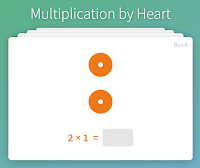
The Multiplication by Heart cards (created by Math for Love) are great visual practice for students as they learn to understand and master their multiplication facts.  


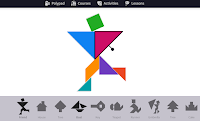
Of course, I also enjoy the Tangram  Builder which is located in the Activities section.


Exploding Dots can also be found here.  If you have not spent time in the Exploding Dots world by James Tanton, do yourself and your students a favor!  It would make for a great exploration for your students.  The Exploding Dots experience on Mathigon is an extension of the actual website, but still one to get you thinking.


What really got my attention on Mathigon is its Polypad section!  It has so many unique manipulatives and tools to offer your students.

This polypad includes a balance scale and fraction bars. Each could be used separately.


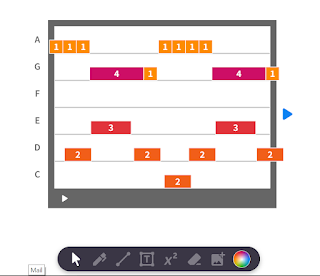
Students can make music using these tools found in Polypad.


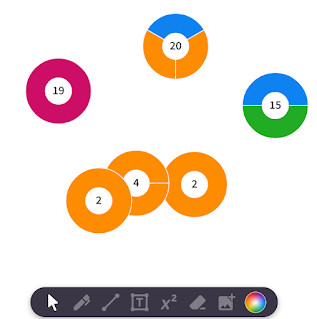
These Prime Factor Circles are a match to Prime Climb and can be decomposed (if composite) or combined as you wish to create new products.


This is just the tip of the iceberg in this fabulous site.  You can save and link activities that you make within the Polypad, but you can also use some of the many that are already prepared.  One last thing to explore is the Lessons tab.  Inside of there you will find your way to a variety of puzzles and explorations for you and your students.

Take the time for your students and yourself to explore this site.  You won't be disappointed!


Monday, January 31, 2022

The Value of Routines

Classrooms with strong routines reap many benefits.  This has become very evident this year as i have seen so many more classrooms begin math instruction each day with a routine.

In this year of continued chaos caused by the pandemic, teachers are finding that through routines, they can reinforce and review skills from previous grades.  They are also able to use routines to preview skills that might not be coming until later in the year.  So many free, well-designed routines are out there for teachers to use that it is easier than ever to find one that meets our students' needs.

Low-floor, high-ceiling routines are wonderful for engaging all students, and they usually involve a visual that helps students to all be able to "step-in" to the learning.  Favorite examples of these types of routines include Which One Doesn't Belong and Same/Different.  Teachers and students alike enjoy these routines because there are so many possibilities within one routine as they allow students to make sense of the problems in ways that make sense to them.

Many of the routines from Steve Wyborney are also loved by teachers and students.  These routines contain visuals, offer great exposure to vocabulary, and build number sense.  Teachers love them because they are professionally made and easy to use, and students love them because they are fun!  

Of course, Number Talks also are a routine that helps to build student discourse and fluency.  Using the book as a guide for these helps students to develop and use strategies when they are ready.  Doing Number Talks regularly has been shown to grow student fluency and flexibility in computation.

As students become more familiar with routines, there are many ways teachers can tweak the format.  For example, they might decide to have students create their own following a favorite routine.  (Creating your own Which One Doesn't Belong isn't as easy it might seem.)  Students can create these routines and share them with other classrooms besides their own giving them a larger audience for their work.  Teachers might also use routines as a daily warmup such as revealing one clue a day to an Estimystery and then discussing the students' thinking at the end of the week.  I've even seen teacher print out images from routines and have students discuss them as they wait outside of a special class like PE or music.  A routine image might be part of a weekly newsletter so that families can discuss it together.   There are many ways that these routines can be used throughout a day's learning in addition to a warmup for math block.

All of these math class routines help to build a strong classroom culture of open, flexible thinking.  They also strengthen students' number sense and confidence while expanding their math vocabulary.  Teachers gain better insight to student development and can use these routines to help determine what next steps to take instructionally. They see quickly how students grow through the use of routines that meet their student needs; the routines may change from year to year.  

Math routines help us to build mathematicians whose confidence help them to take on the math practice standards as part of who they are. 


Tuesday, November 5, 2019

Continuing Thoughts on Math Facts


Some of the biggest concerns I get from teachers revolve around math facts.  Oftentimes, when they hear my response, they think that I am saying that math fact fluency is not important.  That is not true.  I do believe math fact fluency is important; I just don't believe that most of our class time should be spent on rote math fact practice.

This is a topic of much discussion among math educators, and books continue to be written addressing the ways to build true math fluency.  Graham Fletcher and Tracy Zager are piloting a math fluency kit that should be available soon, and I can't wait to see it in action!

I have been recently reading No More Math Fact Frenzy by Davenport, Henry, Clements, and Sarama.    It reinforces the ideas that I continue to communicate to teachers.  Rote memorization is not a method for students to best learn their math facts.  It does not lead to a true understanding or flexibility of number that defines fluency.

Some ideas to consider:

CountChoral counting is a great way to build number fluency.  Counting forwards, backwards, by different multiples....This not only allows students to think about the strings of numbers, but it helps to build a mental number line for students which is so helpful for future success with mathematics.  Learn more about choral counting here.

Make your fact practice visual. Create structure that students are familiar with, and have them see the fact rather than just memorize the fact.  For example:
Seeing 7 x 6 this way helps students to visualize how knowing 7 x 5 can help them get the answer for 7 x 6.  Using subitizing is still important as students get older!

Rekenrek and ten frame visuals are also great for addition and subtraction facts.  There is nothing wrong with students using fingers for a while either.  They are a built-in tool. We hope that they eventually gain the confidence to know the sums and differences without their fingers, but if using their fingers helps it to make sense, let them!

Use number talks.  Asking students to use dot cards to make sense of math facts is important because it allows them to decompose numbers in different ways and to hear different people's strategies.  The above image could be an example of a dot card number strategy for older students, but more simple dot cards for primary will also allow for students to see the fact.  Traditional number talks with numbers written horizontally also build fact fluency through exposure to multiple strategies.  For example:
When students discuss the way that they solved a problem like this, they gain a better understanding of number.  Maybe one student added 7 + 7 and then added one more.  Another decomposed 7 into 2 and 5 so they could make 10 + 5.  Maybe another started at 7 and counted up to 8.  Number talks give students opportunities to make sense of problems in ways that make sense to them, but they also give you the opportunity to make connections between the strategy they used and those that their classmates used.  The goal is for students to not only think more flexibly but also to look for a more efficient method.

Make connections:  Help students to see the connection between operations.  How does addition help us to do subtraction?  How is multiplication related to addition?  How are subtraction and division related?  Not only asking these questions, but having students explore with manipulatives and discover these relationships will help students to have a better conceptual understanding of the relationship between operations.


Play games:  Games that practice math facts are always good not only because students get the opportunity to use their facts, but also because they get to practice important social skills like taking turns, good sportsmanship, and taking care of materials.  The best games include students having to use strategy besides knowledge of facts.  Encourage parents to play games at home with their children.  This is one of the best ways for parents to help their children become better mathematical thinkers.

Make it real:  Find as many examples as you can in the real world to help students see how the operations are used.  Adding the chairs at one table to the chairs at the other table, finding an array in a display of student work, and talking through the math of your lunch count are all real world ways for the students to make more sense of their math.


Trying some or all of these ideas should help students to gain more flexibility and fluency with their math facts.  I believe it is better use of time than pages of math facts, repeated rote practice on a computer program, or timed tests.  Knowing your math facts fluently does free up some brain space as you work through more complicated mathematical concepts, but conceptual understanding is much more important than rapid fire!

Reminder of math fact progessions:
Kindergarten:  Fluency of +/- facts within 5
1st grade: Fluency of +/- facts within 10
2nd grade: Fluency of +/- facts within 20
3rd grade: Fluency of x and / facts within 100


Friday, August 31, 2018

Continuing to Find Ways to Build Math Talk


I have participated in a number of professional discussions in the last week around the concept of Number Talks.  You may remember that I blogged about Sherry Parish's book before. It is an excellent resource to help you get started with Number Talks.

Many classrooms use Number Talks every day.  It is a great tool for building mathematical discourse, exposure to new strategies, and strengthening students' flexibility and fluency.

However--some people are a little intimidated by Number Talks.  It has some elements of the unknown, and this makes teachers a little leary to try it with their own students.  This is totally understandable.  One way to make this work is for the teacher to work on the anticipation part of the number talk fully.  By anticipating all of the possible ways a student may respond, it will give you the preparation to feel confident as you step into the Number Talk.  It will also allow you time to prepare visual images to represent ways that the students might explain.  It is important that we show the students' ideas using visual representations as this will allow us to reach more students.


Here is a great example of ways that students might see 18 x 5.


I do believe that the term Number Talk is broader than just the use of functions with numbers as is found in the Number Talks book.  Of course, traditional number talks often involve quick-look cards and other visuals to help students visualize the math, but they are still considered to be from the basic concepts presented by Sherry Parrish in her book.

If you click on the tab labeled Routines located at the top of this page, you will find links to resources and videos of a large variety of mathematical routines that will encourage students' math talk.  There are many low-floor/high-ceiling activities which are good to put the students (and sometimes the teacher) at ease when doing a number talk.  In these types of tasks, nearly everyone can find an answer right away, but because these routines lend themselves to multiple answers, we find students recognizing all kinds of things besides the obvious.  Using these type of routines in addition to Number Talks will help your students to grow in ways you won't believe!

Challenge yourself to something new.  Try to add routines to your math class each day--you will be glad you did!

Tuesday, February 6, 2018

Student Accountability for Fluency

A discussion we have all of the time--with each other, with parents, with students--is about learning multiplication facts. "Why don't they know them like we did?" 

It is important for them to understand multiplication and how it works.  It is important for them to have efficient strategies to help them determine the product of two numbers. It does make future, more complicated math less daunting. We do want them to learn those facts--it is a 3rd grade standard: 3.OA.7:  

Fluently multiply and divide within 100, using strategies such as the relationship between multiplication and division (e.g., knowing that 8 × 5 = 40, one knows 40 ÷ 5 = 8) or properties of operations. By the end of Grade 3, know from memory all products of two one-digit numbers.

However, many of our students do not know them. They do not remember them from year to year. They continue to struggle with recall of these facts throughout their schooling.

We need to remember that fluency is not just measured by automaticity.  Fluency also includes efficiency, accuracy, and probably most importantly, flexibility.  For the purpose of this post, I am mainly focusing on the element of automaticity.

As many of you have heard me say, I do think some of this is the changing of the times.  Students do not have a need to use their memory as we did when we were their age--they have so many tools that will remember things for them.  When I was a child, I knew all of my friends' phone numbers.  People today have no need to memorize their friends' phone numbers.  I can't tell you very many of my friends' cell phone numbers today, but I still remember Gena Corbin's phone number from 1978.  Our students don't memorize things very often anymore.  This is not a skill that is well-developed in them, as it was for us.  And--it makes sense. Why memorize things when you can access them in the click of a button?

I think this question also leads into the next reason I believe they don't learn them as we wish they should.  They know they don't need to--they'll be able to access them easily as they get older.  In their minds, learning these facts has little value.

While we can't change these factors, we can help our students to retain more of these facts.  The best way is through use.  Games and other activities that ask them to know their facts will help them to remember many of them.  Daily usage of facts and discussion/teaching of strategies/Number talks in the classroom will help many of them to make sense of the facts and the patterns found within them.

I had a middle-school teaching friend who shared this with me.  I think it puts the accountability of the facts onto the students.  First, give each student a multiplication chart.


As they practice facts and find that they know some from memory, they can begin to cross them out.

This will allow them to only see the ones they don't remember from memory, and they won't continue to look back at the ones for which they have demonstrated mastery. It would be a good thing for the class to discuss how the facts that you know can help you to learn facts you are still struggling with.  This could be the subject of multiple number talks.

They should be able to better self-assess their knowledge of these facts and will be able to see their growth as their chart becomes darker and darker.

3.OA.7 is a standard that will help our students in the long run.  We want them to be successful in them.  However, too many of us are putting too much pressure on ourselves to get our students to learn them.  Maybe, using this method will put the focus onto our students for mastery.  

We make it our goal for them to "master" these facts by the end of their year with us, but in recent trainings, 4th, 5th, and 6th grade teachers all said that students come to them not knowing these facts, so they had to work on teaching them all over again.  Each year, teachers send students on thinking that they have mastered these facts...

Only a handful of our students are mastering these facts. Because really--students can access this information in an instant. They don't understand why we think it is important.  It is our job to offer students many opportunities to use them, to practice them, to self-assess their knowledge and understanding of them, and to have strategies in place that they can use when they don't remember the product quickly.  The stress we are putting on ourselves now to help students gain mastery isn't working (for them or for us).  

We need to put the ball in their court.  We need to show them how valuable knowing these facts is as the math becomes more difficult.  We need to make them the owners of this learning. 


Monday, October 23, 2017

Area Model Thoughts

I 💗 the area model!  I think it is worth your while to watch this video if you teach this method! (and even if you don't)


 Thoughts?

Thursday, January 26, 2017

Valentines Fact Game

I saw something like this online, and I decided to create a similar one.  It is a Powerpoint game that you can use to help your students practice their math facts. I have created a version for students to play independently and another one for them to play as teams.

Download the Powerpoint and the Bingo Cards.  The Powerpoint is set to advance to the next slide after 4 seconds.  The team version uses the same Bingo Cards but the slides are in a different order and there are slides inserted to tell the students when to change players.

I think it will be a fun way for them to practice their facts.  Students are expected to be fluent (efficient, flexible, accurate, automatic) in addition and subtraction facts up to 10 by the end of 1st grade. 3rd grade students should be fluent in multiplication and division facts within 100 by the end of the year.

VALENTINE BINGO CARDS Addition 1-10

VALENTINE BINGO POWERPOINT  Addition 1-10


VALENTINE TEAM BINGO POWERPOINT  Addition 1-10


VALENTINE BINGO CARDS  Subtraction 1-10

VALENTINE BINGO POWERPOINT Subtraction 1-10


VALENTINE TEAM BINGO POWERPOINT Subtraction 1-10

VALENTINE BINGO CARDS Multiplication within 100

VALENTINE MULTIPLICATION BINGO POWERPOINT  Multiplication within 100


VALENTINE TEAM MULTIPLICATION BINGO POWERPOINT Multiplication within 100


VALENTINE BINGO CARDS   Division within 100

VALENTINE BINGO POWERPOINT  Division within 100

VALENTINE TEAM BINGO POWERPOINT Division within 100

Please let me know if you have any problems accessing or using these Powerpoints.

Friday, November 18, 2016

Timed Tests...How can we measure automaticity?

A common discussion I have with teachers centers around the idea of measuring fluency in our students.

Fluency is much more than automaticity. That is part of the eventual goal, but it is not necessarily the most important goal. In fact, while fluency is a part of every grade level's standards, 2nd and 3rd grades are the only grades where "instant recall" or "knowing from memory" (automaticity) is mentioned.  Both of these grade levels ask for this piece to be mastered by the end of the school year.  In grades K-1, students are focusing on the fluency piece which builds students'  number sense.

We need to seek out ways to measure this "knowing from memory" other than timed tests.  Jo Baeler, a professor at Stanford and a leading researcher in mathematics instruction wrote this interesting article for the NCTM in April 2014.

So...how can we measure instant recall without giving timed tests?  I know they are easy to administer--I gave them, too, for many years, but I eventually found that the students who excelled on timed tests were the same kids who picked up on their facts easily no matter what practice we used.  

There are a number of ideas that I think we could try.  
*Observation in the classroom is an easy example.  Watch your students as you work in small group, during minilessons, or when they are playing games.  Do they know their facts in these situations?  
*The use of games and student data from games can help demonstrate instant recall.  *Consider using a fact exit slip before leaving for a special....you could present a fact and students would write the answer on the slip or on a dry erase board before leaving the room.  You could use this data over time to help show instant recall of facts.  
*Have your students self-assess:  provide them with a list of 10 facts and have them complete them and mark the ones that they knew automatically.  
*Take a few minutes of transition and have the students roll two dice or draw two cards, write down the numbers, and perform the operation they are currently working on.  They just keep rolling and computing until you tell them to stop.  (In this scenario,  you could differentiate the problems by giving specific dice or cards to the child)  When they are done, they turn in a list of facts that they completed.  
There are many alternatives, and you are all so creative. Besides, you know what works best for your kids.

The thing is... this goal of instant recall is for the end of the year.  We don't need to begin measuring the instant recall until later in the year in 2nd and 3rd grade.  We should be working to immerse our students in the facts that best fit their needs.  Our books lay out a plan for fact acquisition.  Many of your students will move according to this rate.  Games and activities would build off of only the facts that have been instructed.  If doubles haven't been taught yet, the students would only be working on facts which have been covered in the classroom.  If we begin measuring the automaticity of these facts too early, we just beat kids into believing that they aren't good at math.  We need to work to show them different ways to build their fluency throughout the year, and saving our worries about instant recall until the end of the year. This will allow our students to interact with the numbers and patterns in a more meaningful way, and hopefully, lead to the acquisition of these facts.

Many teachers use Xtramath to help build this automaticity; while this program does have a timed piece to it, I don't believe that the time factor is as negative as it is in a timed test or another program like RocketMath.  As mentioned above, many children just gain anxiety about their facts from these timed situations.  

Most importantly, we want our students to feel good about math and their skills.  I was doing a math running record the other day on a student, and I asked him if he liked math.  His response was, "No, I'm not good at it."  Yet, when we completed his running record, he had used very high-level strategies to determine all of his answers.  He was not automatic about all of the answers, but it was impressive the ways he had learned to acquire the answers.  That, to me, is more important than the instant recall. I told him how good he was with math, and he was surprised to hear that.  :(

I have read multiple articles comparing math fluency to reading fluency.  We would not expect students to read or work beyond their level in reading.  Why do we do that in math--pushing them into facts before they have mastered others?  Would we rather have a student who can comprehend or one who can read all the words but has no idea what they mean? I believe we need to revisit our beliefs about math fact fluency and look to make our instruction match what the research shows.

So--as we work to build our students' fluency in facts--here is another activity you can use this month for individual practice.  By using different dice and menus, you can differentiate it for each student.  I shared this with a friend a couple of years ago, and her students liked it so much that she created one for many different times of the year.   

What do you think about this?  Do you have other ways to informally assess this standard?


Tuesday, November 1, 2016

Only 8 Fridays 'til Christmas!

And only 7 of those are we in school!


I created these Christmas tree puzzles for practice on math fact fluency.  They could be used in lots of ways in the classroom.

Download the ones you want.  The directions are included.


Merry Christmas!  :)


Thursday, October 27, 2016

Have you checked out Greg Tang's website?

You might know Greg Tang from his great math books like The Best of Times,  The Grapes of Math, or Math Potatoes.   Many of his books are included in our Math Reads sets that we received last year.  His books are great mentor texts for reading, writing, or math workshop!  He includes strategies to help the reader make sense of the numbers.

Whether you are familiar with his books or not, his website is a great resource for all grades!
On this site, he has activities that correlate with his books. (One of these could make a great minilesson.) He has a word problem generator which allows you to differentiate your problems depending on student needs.  In addition to those great features, the site also has some pretty awesome games.  These games are leveled and many can be used from K-5.  The games allow for practice on subitizing, coins, integers on a number line, and more.

I think this site deserves a look-see.  Let me know what you think!


Sunday, September 18, 2016

Make Ten Resources


Making ten is  an important addition strategy for primary grades.  Here are some resources to help your students comprehend the concept as well as develop some automaticity of facts.  When working on facts, always try to have your students first involved concretely, then pictorially, then numerically/abstractly.  Fact fluency involves good understanding of the concept--not just rote memory. I have labeled each activity with a C, P,or an A.  

Most of these would make great math stations! (Many of the examples have links to PDFs, SMART Notebooks or other things you might need)

This picture shows a life-size idea for ten frames.  You might also consider having your students stand in the spaces of the ten frame for a more kinesthetic experience.  Dr. Nicki recommends using a shower curtain and duct tape.  I have found that plastic tablecloths hold up pretty well to kiddos standing/walking on them, too.   C


Number Bowling:  This game comes from What the Teacher Wants.  Students bowl the tennis ball and then figure out the combination that made 10.  I think you could play it with an addition or subtraction number sheet. Here is a recording sheet to help with subitizing and recording their game. C


Make Ten Bracelets:  This idea comes from Kindergarten Doodles.  You could use pipe cleaners as bracelets or beaded number lines of ten... C


Ten Frames Puzzles:  These ten frame puzzles are from FirstGradeTeacherLady.  P


Visualizing/Modeling Template:  This template has kids show the fact in a variety of ways.  Maybe you make a book of them for Make Ten facts...P


Make Ten games:  This doc contains three different "games" for making ten.  Each game requires a 10 sided die.  They can be played as an individual or with a partner.  A (but could be Concrete if you provided manipulatives)

Number Bonds Game: I have shared the number bonds link before, but this one focuses on making ten.  A great online challenge.  A

This video uses pictures, numbers, and music to teach.  P  

SMARTBoard Games: This doc has two different pages that you could use as a whole class to practice Make Ten Facts.  A

Once you think that a fact strategy has been conceptualized, try it out with story problems. This page is a start to some Make Ten story problems for your children to solve.  Consider including manipulatives and encourage drawings or number lines to show their thinking! P/A

In the end, our goal is to help kids see the relationship between a number and ten.  If you are interested in using subitizing in your classroom in a more systematic way, consider registering for these 3 free videos for some great professional development.  You can do them at a time that works for you. They are presented by Christina Tondevold, the Recovering Traditionalist.

If you have a colleague you think would like this post, please share. Do you have other ways you work to teach Make Ten facts?  Share in the comments.  :)

Sunday, August 28, 2016

Building Fact Fluency


Fact fluency is usually an important piece in math success.  It is recommended that you have 5-10 minutes per day involved with individual math fact practice.  I know this is hard to make work some days.  If you can't get that math fact practice in daily, maybe you can just try to get practice in more often?

I have created flashcards to help you with this. Children should use flash cards once they have the understanding of the strategy and can represent it concretely and pictorially.  Flashcards can help to lead to automaticity. These are self-checking flashcards.  Print them out and then run them back to back.  Use a hole punch to make holes where the three answer choices are.

When the students go to use them, they choose their answer and stick their pencil through the hole that they think is the answer.  They look at the back of the card, and if they are correct, the hole will have a ring around it.

These might work well at a center, or you might have students keep a set in their desk to practice when they have finished other work.  You decide how they might work best for your classroom.

There are different versions so that you are able to differentiate as necessary.  Download whichever ones you think might help you.

Addition/Subtraction Facts Under Five

Addition/Subtraction Facts--Doubles

Addition Facts--Doubles + 1

Addition/Subtraction Facts--Make Ten

Addition/Subtraction Facts--Under 20


Addition/Subtraction Facts--Extension


Friday, August 19, 2016

Fact Fluency

Fact Fluency is a big part of the CCSS.  However, we sometimes get caught up in thinking that fact fluency is just automaticity of facts.  Automaticity of facts is one piece of fact fluency, but there are other parts that are important, too!

Fact fluency includes accuracy--Does she get the right answer consistently? Can she prove to you how she knows it is the accurate answer?

Fact fluency includes efficiency--What strategies does the student use to help her know or remember the fact?  e.g. Does she recognize doubles + 1 facts?  Does she understand how place value influences 60 x 70?  Can she explain it?

Fact fluency includes flexibility--Can she use fact families to help her solve an unknown fact?  Can she relate one fact to another easily?  Can she use a variety of strategies to explain the problem? when solving facts? Does she understand how the commutative, distributive, and associative property work Can she move easily from one operation to the next?  Does she know her facts easily in written or mental form?

In reading, we know that it is important not only to decode, but also to comprehend.  There are many pieces to being a good reader, and decoding and comprehension are only two.  The same is true for math.  In order to strengthen our students' fact fluency, we should find ways in our classroom to encourage all of these elements of fact fluency.  Not only will it increase our students' fluency, but it will also lead them to better number sense.

Dr. Nicki recommends that we have a 5-10 minute block daily in our classrooms where students work on improving their fact fluency.  I know that our days are full and finding 5-10 minutes is not always feasible, so I suggest we just be more cognizant of trying to fit facts in more often--and not just instant recall--think of other ways to present your facts to kids.  I will try to share more ideas and resources for this as the year progresses.

To help boost your students' fact fluency, I have created two math path puzzle SMART documents. One covers addition and subtraction, and the other multiplication and division. Each screen is a different puzzle with each group of puzzles becoming progressively more difficult.

There are many ways you can use these in your room.  You could print out a page or two and use them as a station during workshop.  You could use a page every now and then as a warmup activity for the whole class. You could use them as part of a Number Talk.  The choice is up to you!

Parts of these files could be used in every grade K-5.  Click on the links to download the Notebook file or files to your computer.
Addition and Subtraction MathPath Puzzles


Multipication and Division MathPath Puzzles


TIP:  When I use pages from a file like this, I put a blank page in the doc as a bookmark.  That way, when I come to grab another puzzle or two, I remember which ones I have used.