Showing posts with label websites. Show all posts

Saturday, October 17, 2020

So much good in one place!


Many of you are familiar with the beauty of Splat! and all that it can offer our students.  It also has the great quality of being a routine that can be used throughout school.  It is certainly a routine that students, teachers, and this math specialist love due to its visual qualities, critical thinking elements, and engaging ways!

But the master behind Splat! has many other great resources available to teachers.  They are opportunities to expose our students to many concepts and to encourage some rich discourse in our classrooms.  And, best of all, Steve Wyborney shares his wonderful creations with us in the form of free downloads.

These resources are good in a normal year, but this year, they are especially nice to use in a virtual learning format.

Here is a run-down of some of the things you can find from Mr. Wyborney:

Splat!:  Beginning with concept of missing addends, the Splat slides move from primary concepts to fractions and algebra as the slides become more complex.  Students benefit from the visual nature of the slides, and they love the game feel of it all.

Esti-Mysteries:  Another popular routine with students, esti-mysteries merge the skill of estimation with critical thinking.  One clue is revealed at a time so that students can narrow down their choices.  In the end, they still depend upon their estimating skills for a final decision.  One thing I like about this routine is that once it has been taught, I think it can be used in many ways including revealing a clue a day with the final discussion occurring at the end of the week.

Estimation Clipboard: This is one of my favorites!  This routine again builds off of the concept of estimating and makes it fun for students to take the risks when making an estimate.  An image is shown, students make an estimate, and then the answer is revealed. Another slide is shown with a change in the image, and the students adjust their estimate.  This simple routine has hidden sophistication in that it often has hidden benchmarks for students to use to be able to make a better estimate.  Many of the images are about number, but I especially recommend the slides that deal with length.

Cube Conversations:  These 3D images are a great way for students to get an introduction to volume and to build their visual and grouping skills.

Tiled Area Questions:  Beginning as general area problems, these develop into more complex relationships between whole and fractional numbers.  Again--an opportunity to stretch our students' thinking and their abilities to justify their thinking.

His animated multiplication chart is a nice tool for students to explore patterns and be exposed to their facts.

I know that for many of you Splat! is a common routine used in your classroom, but I wanted you to be aware of some of the many other treasures that you can find on this website.  If the past proves anything, I would bet we can look forward to other great ideas to be created by him in the future!  Have fun exploring this awesome sight, but more importantly, have fun watching your students think, engage, and discuss mathematics in such fun ways!

Tuesday, March 10, 2020

Math is Visual


Our students need access to math visually as much as possible.   This can come in different ways.  Drawing, manipulatives and online components are some places to start.

I spend a lot of time in classrooms working around word problems.  One of the things I find myself constantly coming back to with students is "Think like a reader:" use schema, make predictions, infer, VISUALIZE...that is what good thinkers do.  Asking students to draw what they are seeing happening in the problem is an important step.  That drawing can be a true drawing, a number line, a tape diagram, or anything else that helps them make sense.  Are they thinking through the problem or are they just pulling the numbers and computing without making sense? 

I also use numberless word problems a lot. Numberless word problems give students the opportunity to see the problem as a story and to make sense of it without worrying about the numbers.  Once you have practiced this strategy in class, it is a strategy they can refer to independently when they come across a word problem that confuses them.

Manipulatives are important, too.  CRA instruction helps us to build the visual into the child's mind by using tools to represent the math.  This is important for all students and provides equity in instruction.

There are many websites with visual representations.  One of the best is Math Visuals.  Berkeley Everett has created a treasure trove of visuals for the K-5 classroom.  His short videos to accompany skills like counting and computing are a fabulous resource, but they are just the beginning.  He brings visual supports to understanding mathematical properties and making connections through visuals, too.  In addition, his Math Flips cards are well worth the time to cut out and use with all of your students.

Many other awesome websites exist, too, that are very visual.  Math is Visual, Fraction Talks, Same or Different, Number Talk Images, and Slow Reveal Graphs are just a few of the visual resources that may help you and your students make more sense of mathematical concepts.

Visual math is for all students.  We have to be careful not to assume they can see it in their heads.  We have to help them see it in their heads...Visuals help students to make sense.  They help students to look for patterns.  Visuals help students to answer the question, "What does the data tell us?"

In what ways can you provide your students with more visuals?  This is an important area for all of us to grow.

Friday, February 1, 2019

Another Resource for Better Communication with Parents


As we work towards shifting our instruction from deliverers of knowledge to facilitators of learning, it is important that we keep parents informed about what students should know during the current grade level.  I recently came across this site  by GreatSchools.org that has videos for parents that are aligned to grade level expectations for students.

What I like about this site is that the video clips primarily focus on conceptual understanding rather than rote memory skills.  They reinforce the message that we should be sending parents:  Student understanding is the key to future math success.

Please, share this site with your parents!  Whether you just send a general email sharing the whole site or choose one specific video that aligns with a current concept, I think our parents will appreciate your efforts to help them make sense of the rapidly changing classrooms they find.

These videos would also be good to share at the beginning of the year or at conference time.  I hope you and your parents find them helpful!

Tuesday, May 15, 2018

Growth Mindset Resources

from the great Jo Boaler and Youcubed!

Are you looking to strengthen your capabilities when teaching students about Growth Mindset?  Jo Boaler has created  this resource to help us grow as educators so that we can help our students grow as learners!

The site focuses on 5 Mathematical Mindsets and gives us clear pictures of what they should like in the classroom.  There are even videos that we can watch to help us understand. She has a user guide and a teacher's guide to help us understand where we are going.

This summer, take the time to explore this fabulous resource so that you can learn even more about growth mindset in our classroom.  I don't think you'll be sorry!

Wednesday, April 25, 2018

Another puzzle website!

I have posted before about the algebraic thinking mobile puzzles from Solve Me Puzzles.  They are great for increasing our students' understanding of equality, and they give even our youngest students some exposure to algebra concepts.

Solve Me Puzzles has another great puzzle called Who Am I?  These place value puzzles ask students to figure out the value of the number from the clues.  There is some similarity between these puzzles and our Everyday Math place value puzzles.
On both sites, the puzzles progress in difficulty.  I think both puzzle sites could be used in some way with students in 1-5.

There is a third puzzle available on the Solve Me Puzzles menu.  It is called Mystery Grid.  You might have students who enjoy it, too.  It has some similarities to Sudoku puzzles and KenKen puzzles.  (I don't find it quite as much fun as KenKens...)

These puzzles might work well as an opening or closing activity during your day, a partner activity, or a station during math workshop.  They will definitely help build our students reasoning, thinking, and mathematical skills!

Thursday, March 8, 2018

Start with Counting

Counting is usually our introduction to numbers. From an early age, we heard people around us counting.  It is such an important skill, yet sometimes we look past it as too primary.

After the NCTM Regional Conference last fall, I came back with tons of ideas I wanted to put into action.  One of the biggest concepts I decided to do more of is counting.  I often work with students who struggle with basic number sense, and since that conference, we begin nearly every day with counting.  Sometimes we count by 1s, sometimes we count backwards, sometimes we count off decade....you get the picture.

I always try to use visuals/concrete objects as we are doing our counting, but sometimes my fingers won't move fast enough to keep up with the students pace.  Recently, I found this AWESOME site full of math visual videos that we can use as we count.  

Using these visuals and asking questions about what is happening is important to helping our students gain a better understanding of numbers.  This link takes you to the counting and place value videos, but Berkeley Everett has created visuals to go with many other math concepts.  Using these videos will really help us to make our math more visual!


Counting isn't just for our littles!  It is a great idea for all classrooms to begin class with counting.  Counting by multiples, fractions, whatever will strengthen your class's thinking and understanding of number!

Friday, February 16, 2018

Same or Different?

Looking for a new routine to use in your daily workshop?  Same or Different could be your answer!

This blog has a great variety of images and videos for teachers to use to get this routine started in their classrooms.  There is also a link to a Teaching Channel kindergarten lesson using this routine.

It's just one more way for us to encourage student talk around math.


Tuesday, February 13, 2018

Estimate! Estimate! Estimate!


A key to building our students' number sense is to practice estimating.  Many times, students and parents look past the estimation part of a computation problem, valuing instead the final, more accurate answer.  However, John Van de Walle's research revealed that estimation is a higher-level skill.  It is important for our students to be able to mentally manipulate numbers through estimation.  It is a real-world skill that they will use daily as an adult.

We know that predictions are important in reading.  It helps readers to focus their comprehension to determine if their predictions are correct.  It also gives them a little more ownership of the story as they read to find connections between the predictions they made and the reality of the story.  As readers grow more proficient, their predictions tend to gain accuracy.  The same is true with mathematical estimates!  Our students will grow in their abilities to estimate the more that they practice.

Math is Fun has a good post that highlights for our students the value of estimation.  It also has a page of estimation games to help students practice in a fun way.

However, for whole class or small group practice, here a couple resources to help you practice regularly in your classroom. 

For K-2:  This Powerpoint has estimation activities for your students to practice.  There are 40 slides in the presentation, and maybe it will give you more ideas to implement this skill into your classroom.

Estimation 180 is a website that I have shared before.  It has images that build off of each other to help students use prior knowledge to make a best estimate.

All of these resources are good for building our students' understanding of number.  What resources have you found helpful in your classroom?  Share in the comments below.


Thursday, February 8, 2018

Algebraic Thinking Puzzles


I am often asked about ways to challenge our students during math workshop.  I believe it is important that we have a variety of problems that we use.  I also don't think we should spend much of our time accelerating content to teach our students things beyond our grade level.  There are many ways we can build their thinking and logic skills by having them look at numbers more flexibly. Building deeper thinking skills will enable them to persevere as they move into more challenging problems in the future. 

I recently came upon this site.  I think it could have many uses in classrooms as low at 1st grade.  Teachers could use some of the puzzles for a whole class think aloud.  They might also choose to have students work in partners to solve the puzzles.  They might print out a few of the puzzles and have students work on them on paper.  They might introduce some individual students to them.

These puzzles offer students opportunities to think algebraically about numbers and to better explore the meaning of equality and balance.  

Solveme puzzles has three levels of problems:  Explorer, Puzzler, and Master.  Problems become progressively more difficult as students move through the levels.  There are some that involve fractions and negative numbers.   I solved all of my problems as a guest, but you might find it beneficial to create accounts for students.

Let me know what you think of this site.  Feel free to share it with a colleague.  Try some of the puzzles yourself--you might find that you enjoy them, too!

Monday, January 29, 2018

Visual Math

Another great website resource is available to us in Math is Visual. This website, maintained by Kyle Pearce, and it takes the concept that we continue to learn more about from Jo Boaler and gives us videos we can use in our room to support our teaching.

Math is visual!  When students see HOW math works over just memorizing abstract algorithms, they understand better.  This videos on this site will help guide you as you begin to include more visual examples, but it will support your students in having a clearer understanding of numbers and how they work.


Wednesday, January 24, 2018

Valentines Would You Rather

I have shared with many of you the website wouldyourathermath.  It offers great opportunities for your students to reason with real math problems.  It also offers them opportunities to explain their reasoning--something that we know is difficult for students. We need to be sure to offer these opportunities to all of our students so they can begin to practice more math thinking.

You might want to offer these to your students and ask them to give verbal explanations for a while before you begin asking them to write their reasoning. Be sure to encourage the use math vocabulary as much as you can, and to explain to them that they need to use math reasoning.  (They might tell you they would buy the M & Ms instead of the Butterfinger because they don't like peanut butter, but they need to acknowledge which one is the better math deal.)

Here is a simple Valentines Would you Rather? that you might want to try with your class.  I have scaffolded the writing portion of it by offering sentence stems at the bottom.  

Would You Rather? Valentines Candy (easier version)
Would You Rather? Valentines Candy

I recommend you take the time to check out the website!  It has a lot of prepared problems that you can use, or it might spark an idea for one of your own!  If you make some and would be willing to share, send me a link or share below.  Enjoy!

Thursday, January 4, 2018

Real World Math

Math@Work offers upper grade teachers some great resources to use in the classroom.  The website offers webisodes and downloadable lesson plans and resources which will help yo ur students begin to understand the connection between math and their future careers!

I watched the webisode with Ty Pennington in New Orleans building a sustainable house.  The connections and the math were real and would be great stepping stones for our students as they begin to think about the future.  In the video, a math "expert" talks through solving the problems, but I think it would be worthwhile to stop the video and have the students see if they can work together to solve the problem before revealing the expert's solution.


Tuesday, December 19, 2017

Math Talk: Another way to encourage it!

I am always looking for new ways to engage students in math talk.  Math talk is such a powerful tool for building student understanding!

A website I recently found offers some great discussion starters that could be used in a variety of ways in your classroom.  Same but Different Math offers your students images to compare and contrast. These images are categorized to improve your search for what you need.

Let me know what you think about this site or if you would like my help in implementing its images in your classroom!


Monday, December 4, 2017

Math Maven's Mysteries

It always amazes me the free things that I find out there on the internet...

Link to Scholastic's Math Maven's index page


This site from Scholastic offers interactive math mysteries of all levels and on a variety of math topics.  They would be great to use as a small group activity or a problem-solving station during workshop.  It offers many great resources.  Many of the problems are ready for the SMARTBoard, there is the opportunity for the story problem to be read to the students, the teacher's resource has many supplemental activities, and you can print out paper copies for students as well!  The main page provides links to all of these options.  I hope you can find something that will fit your classroom!


Wednesday, November 29, 2017

Holiday Math Online Games

Here some holiday/winter based online math games you might want to try:


Christmas Math:  (K-2)  This site works on identification of numbers, counting, as well as facts within 20.


Math Mosaics: (K-2)  Children solve problems under 10 to color in the squares of the winter mosaic.


Holiday Fun:  (3-5) A multiplication practice game.  Students can choose fact family they want to practice.  Correct answers create a holiday scene.


Blocky Christmas:  (3-5) Logic puzzle from ABCya


Christmas Lights:  (K-5)--Students select the difficulty of basic facts to practice.  They are rewarded at the end with lights to decorate the holiday scene. Students love ABCya!


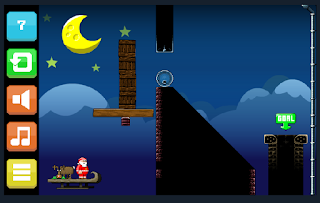
Super Santa Kicker: (K-5) Students use their knowledge of angles and simple machines to help the reindeer kick the stuffed Santas into the goal.


Winter Math MunchMan: (K-5) Students can choose what level of problems that they want to solve.  Then they move through the Pacman maze to capture the answers and beat the ghosts.


Create your Own Snowflake:  (K-5) Students use digital scissors and paper to create a symmetrical snowflake.

Snowline:  (K-5) Students use angles to direct Santa to the finish line.


Winter Jigsaw Puzzles:  Students put together digital jigsaw puzzles.


Thursday, October 19, 2017

Looking for Extension Activities for Unit 4?


If you have some students who pretest out of Unit 4 in Everyday Math, you may find some of these activities will help meet their needs.  Even if you don't have students who test out of the unit, these activities will take some of your grade level's unit skills and look at them at a higher level.

1st grade:
Game of Totals --whole day lesson from Youcubed
Snap It--great small group activity that could be used for combinations of 10
Eggs in Baskets--problem solving problem with conditions that make kids make sense
The Brown Family--problem solving activity
Make Ten blog post--this blog post from last year focuses on resources to help teach making ten
Popping Balloons--A 3-Act task that focuses on combos to 10

2nd grade:
How many Times?--problem solving activity about time
Wonky Watches--another problem solving activity about timeWhich is faster?--problem solving about place value and giving supporting evidence for your thinking
That number square--problem solving about numbers to 100
Fruit Shoot--online place value game where students match base ten blocks to numbers. FUN!
Place Values Shapes game--another fun online game for kiddos to think about place value differently.  Challenging!
Place Value Pirates--online place value game
Would you rather--scenario where students choose what they think is the better choice

3rd grade:
Area Shapes game--good review interactive game for students to practice area
Perimeter Shapes game--online review game that practices perimeter
Quadrilateral Shapes game-- interactive game that has student practice with different types of quadrilaterals
Rectangle Interactive--this interactive activity helps kids connect area to the length of the sides of the rectangle
Paper Cut--3 Act Task that explores area
Numerically Equal--problem solving that asks students to look at area and perimeter
Quadrilaterals--problem solving that looks at different attributes of quadrilaterals

4th grade:
All the Digits--problem solving involving multiplication
Shape Times Shape--multiplication problem solving with an introduction to algebra
Table Patterns Gone Wild!--looking for patterns in multiplication tables
Multiplying two-digit numbers--Open Middle activity for finding a product
Massive Mosaic--3 Act Task which focuses on multiplication of two 2-digit numbers
Would you Rather--scenario where students have to choose and defend the better choice

5th grade:
Scooter Quest--online game to practice decimal place value
Rounding Decimals--Open Middle rounding decimals problem
Meteor Coordinates--This onlinegame gives students a chance to explore coordinate pairs.
Place Value Pirates--online game to practice decimal place value
Hungry Puppies--online game where students choose decimal values to combine to make the target
Matching--this online game has students match decimals, fractions, and percentages
Round the dice--an investigation about rounding decimals
Spiralling Decimals--a game of strategy and knowledge of decimal size

If you have other resources to share, please add them in the comments below!


Sunday, September 10, 2017

Websites to help you kick your teaching up a notch!


I have recently come upon these math websites...

I think they can be used in a variety of ways in our classrooms. There are prepared resources on these sites, but they might also inspire you to create your own.  It might also be a good opportunity for students to create them.

Would You Rather?  This site gives two mathematical questions and students have to determine which they believe will give them the better result.

Estimation 180  This site offers opportunities for students to estimate with the hope that practicing estimation more often will build their number sense.

Fraction Talks Images from this site support the teaching of fractions.  Ideas for using these images are limitless, but as a number talk might be a great way to start.

Visual Patterns  The images on this site are the beginning of a pattern.  Can your students figure out how the pattern works?  Can they write an equation to match it?


All of these sites offer opportunities to expand their thinking and especially their thinking about math.  Many of them are low floor/high ceiling tasks meaning that all of your students can be successful with them.  Consider using them with all students!

I would be happy to help you find ways that these activities could work for you and your students.  Just let me know how I can help!


Thursday, December 22, 2016

Fractions, fractions, fractions

One of the most dreaded concepts by students--and some teachers, fractions is a key piece to better understanding how numbers work.


This post is to share some different resources that might help you as you plan for your fractions instruction.  I have tried to locate a variety: games, enrichment, tasks, and problem-solving.  Please let me know if there is something else you are searching for.  I will be happy to help in the quest.

Let me know if you have questions.  Please share this post with a friend who might find it useful.

E-toolkit:  Our EM ConnectEd component has a great fraction piece to it.  It is worth your time to explore all of the things it can do!  

Battleship Numberline:  Fun practice for 3rd graders on putting numbers on a number line

Slide to the Top:  This game has students place various fractions on a number line.  Can be played with fractions, decimals, or percents.

Dig It:  more practice with locating fractions on a number line.

Fraction Feud:  Students reason about numbers to make fractions bigger or smaller than each other.

Melvin's Make a Match:  a fractions matching game

Greedy Algorithm:  students work to figure out how the algorithm works

Fraction Jigsaw: jigsaw that includes practice of equivalence and addition and subtraction of fractions.

A variety of primary fraction tasks:  these are probably most appropriate for 3rd grade

Ben's game:  Good problem solving activity

Sweettart Hearts:  This 3 act task focuses on 3.NF.1 and 4.NF.4.  3 act tasks give context to problem solving and should be presented in a way which allows students to really explore the problem before solving it.  This notebook file has all of the questions, videos, and links in it.

Do the Dew:  Another 3 act task--this one involves unit fractions and simple addition.  3 act tasks give context to problem solving and should be presented in a way which allows students to really explore the problem before solving it. This notebook file has all of the questions, videos, and links in it.

The apple:  This 3 act tasks focuses on 4.NF.4.  3 act tasks give context to problem solving and should be presented in a way which allows students to really explore the problem before solving it.  This notebook file has all of the questions, videos, and links in it.

Engage New York has some good materials to supplement our Everyday Math study of fractions.  These links just take you to a grade level's page.


Do you have any great resources to share? Please feel free to share below in the comments

Sunday, November 13, 2016

Games That Cover Key Concepts

Calculation Nation is part of the NCTM's Illuminations site.  The games on Calculation Nation allow students to compete virtually with other students around the world to practice key concepts of the upper grades: fractions, geometry, and factors and multiples to name a few.

Here are some ways I think these games could be used in the classroom.

1) Set up accounts for all of your students to play as they wish.

2) Set up a class account and then play on the SMARTBoard as a class to practice key concepts.  

3) Have students sign in as a guest to play the concept that practices an important key concept.

Playing these games on the SMARTBoard to start or finish a lesson could lead to some great number talks and problem solving discussions.  

Share your ideas with others.  Have you tried these games before?  Which ones work?  Which need special preparation?

Share this post with a friend.

Thursday, October 27, 2016

Have you checked out Greg Tang's website?

You might know Greg Tang from his great math books like The Best of Times,  The Grapes of Math, or Math Potatoes.   Many of his books are included in our Math Reads sets that we received last year.  His books are great mentor texts for reading, writing, or math workshop!  He includes strategies to help the reader make sense of the numbers.

Whether you are familiar with his books or not, his website is a great resource for all grades!
On this site, he has activities that correlate with his books. (One of these could make a great minilesson.) He has a word problem generator which allows you to differentiate your problems depending on student needs.  In addition to those great features, the site also has some pretty awesome games.  These games are leveled and many can be used from K-5.  The games allow for practice on subitizing, coins, integers on a number line, and more.

I think this site deserves a look-see.  Let me know what you think!