Monday, March 4, 2024

Mind Shifts

We have spent the better part of a year looking at new curriculum resources that will best support our students to become the best mathematicians they can be.  

A few takeaways that have been identified or reinforced after looking at a variety:

Each curriculum says it is aligned with the CCSS and math teaching practices.

Each curriculum resource has good and bad pieces to it.  

If people just rely on the text in the teacher's manual to deliver instruction, they will not consistently be giving students what is best.  

Books are a RESOURCE. The standards and math teaching practices are what is best, and the book is just a sequence and guide.  Other resources should still be included. (Just because the book doesn't say to pull out a visual or manipulative doesn't mean you shouldn't...most students need these!)

Choosing the resource is not going to mean fabulous or not fabulous instruction. It is what is done with the resource that will make the instruction meaningful to students.

Math discourse does not just mean having students turn and talk more.

Pages of practice problems do not build problem-solvers.  They are not a necessary component of a curriculum resource.

3 Act Tasks are still important even though they are not included or referenced in most curriculums.

Students need time to make sense in their own way first.  Once they have an idea of where to go, they may change that as they discuss and listen to classmates.

Culture has to be built in a classroom.  It begins in August but is reinforced throughout the year and throughout all subjects.  Telling students to persevere in September does not mean they will be able to in April.  It needs to be part of every day with students.

Math should be an adventure--a combination of puzzles, games, practices, talking, and surprising connections that students make--not test scores.

The person delivering instruction still has to make the necessary shifts in their instruction in order to use a curriculum resource in a way that is fair and equitable to all students.  


Have you been through this process?  Have you found these to be true, too? Teaching shifts need to occur no matter what curriculum resource teachers use. 


Friday, August 11, 2023

A new puzzle to consider

Recently, a friend introduced me to this game/puzzle, and I wanted to be sure to share it with you.  It might be a great thing to use your PTO money or ask a generous parent to pick up for the class.

The only problem I really have with this game is its name: Genius Star.  I hate for that to cause students to believe they aren't capable of solving it, or vice-versa, that if they are able to solve it, it makes them a genius! 

This puzzle explores spatial relationships which for so many of our students can be a challenge.  It also offers students the opportunity to distinguish pieces they should prioritize as well as a trial in perseverance!

Here's how it works:

Roll the die that come with the game:


Lay the little white triangles onto the corresponding triangles on the board:

Now, I usually solve these on my own, and I don't recommend that it becomes a racing game, but students then take the 11 game pieces and place them on the board to cover in the star.


Students can compare their solutions to see what they did the same or different.


Students can also reflect on what made the puzzle challenging or easy. 

The box comes with two black trays to solve the puzzle on, but you could maybe get more than one game so that more students could work to solve. I find it quite fun, and it highlights the spatial skills of math.  The company makes other similar games that will show up when you follow the above link to this game.

Students can solve the puzzle in pairs and discuss their findings, they can investigate the dice and the regions of the board that each one covers, they could create their own puzzle numbers that they think are unsolvable and ask classmates to prove them wrong, they could create fractional questions about the puzzle or its pieces, or you could use two solutions for the same numbers as a same/different discussion. It seems to me like there are a lot of ways that this little puzzle could be used!

Let me know in the comments if you have found or find other ways to use this puzzle in the classroom!


Tuesday, April 18, 2023

Removing Ability Grouping while increasing Problem-Solving

One of the biggest missteps that occurs in math core instruction is people trying to organize it the same as they do their reading workshop.  

Traditionally in reading workshop, students are grouped by reading level and then called to the teacher to read and discuss a text at their level.  The teacher's small group instruction is really concentrated during this time when meeting with a small group of students away from the rest of their classmates.

In math workshop, we do not recommend this kind of grouping for students often.  In fact, through the work of Peter Liljedahl, more and more teachers are reading and using the research around VRG: Visibly Random Grouping. In his book, Building Thinking Classrooms in Mathematics, he explains how he realized students are more successful this way.

Visibly Random Grouping can be intimidating to some teachers because it means that they have to give up some of their control.  Not like let the room run crazy loss of control, but letting students work with whomever they match with.  Teachers have spent a lot of time organizing and reorganizing their groups for activities.  The thought of just letting it be random might be a lot.  However, once teachers begin to use VRG, they tend to love the results.

To begin with, the students should witness that the grouping has been random. There are apps that group students randomly(even Dojo), but you can always use playing cards, popsicle sticks, birthdays, or any other method that helps them see that you did not intentionally choose who was going to work together. Liljedahl's research shows that groups of 3 work best in most grades to get all students thinking.  In the primary grades, he recommends groups of 2.

Here are some of the benefits of VRG:

  • Increased engagement
  • Improved collaboration skills
  • Reliance of students on each other more than on the teacher
  • Improved student ability to work with anyone and recognize the strengths that classmates possess
  • Better flow of learning with students not just sharing in their group but also with others in the room: the feeling of being on the same team
  • Perception of the students that the teacher believes they can do it.  They don't have to be placed with a student who can "pull them along" or one that they need to support. No matter who they are with, they will be able to access the problem and move forward.
As teachers begin to move towards more use of VRG, they will find themselves removing labels from students.  This subtle shift in thinking will carry over into the students' views of each other, too.  This video by Jo Boaler offers somemre insight into the benefits of heterogenous grouping.

There are many teaching shifts that Liljedahl discusses in his book.  Visibly Random Grouping is one that is a great first shift for all teachers, and it will help when they decide to give a Thinking Classroom a try.

Tuesday, March 7, 2023

March is Full of Palindromes this Year!

 As we approach the end of March, we come close to multiple school days which are palindromes. From 3-20-23 to 3-29-23, our dates will be palindromes, and they may offer opportunities for you and your students to explore palindromes!

Students of all ages can look more closely at palindromes! I am going to focus on explorations with numbers, but your students might enjoy finding words that are palindromes, too. Here are a few books you might share with your students:


Some of your students may get caught up in noticing individual words that are palindromes, but some may enjoy the word play involved in sayings and phrases that are palindromes.  At either level, it is word work that many students find FUN!

For math explorations, you might not explain to your young students what a palindrome is, but let them discover!  

  • Using your pattern blocks as a visual, you can give students numbers to "create" and allow them to notice what makes these numbers special.  For example:


If you display the pattern blocks to represent different digits, then you can dictate numbers and ask students to create them.  Can they identify the pattern that makes palindromes special?  Can they see with the March dates how they are palindromes?

  • Ask your students to find all of the palindromes between 0 and 100.  What do they notice about two-digit palindromes? Is there a pattern in 3 digit palindromes?
  • Will there be other palindromes this year?  How about next year--What palindromes will there be?  Is there ever a year without a palindrome date?  What can your students find?
  • Finding palindromic numbers Math For Love has a great lesson exploration opportunity where students search for different levels of palindromes. It offers a way for students to add, look for patterns, and have fun with numbers--all in one activity!

I hope you and your students find some time to explore the fascinating patterns and elements of palindromes in our words and numbers!  You might want to consider ending with this Weird Al video, Bob, which is made entirely of palindromes.


Tuesday, November 29, 2022

Mathigon & Polypad & Puzzles...Oh My!

I have been a fan of Mathigon's Polypad for quite a while now, and have found many great ways for it to be used to help students build better mathematical understanding as well as to challenge their current understandings.

I want to share a few of the great resources available on Mathigon in hopes that you will find ways for them to work for you and your students!

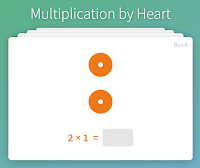
The Multiplication by Heart cards (created by Math for Love) are great visual practice for students as they learn to understand and master their multiplication facts.  


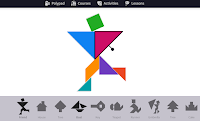
Of course, I also enjoy the Tangram  Builder which is located in the Activities section.


Exploding Dots can also be found here.  If you have not spent time in the Exploding Dots world by James Tanton, do yourself and your students a favor!  It would make for a great exploration for your students.  The Exploding Dots experience on Mathigon is an extension of the actual website, but still one to get you thinking.


What really got my attention on Mathigon is its Polypad section!  It has so many unique manipulatives and tools to offer your students.

This polypad includes a balance scale and fraction bars. Each could be used separately.


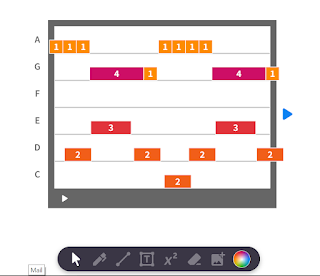
Students can make music using these tools found in Polypad.


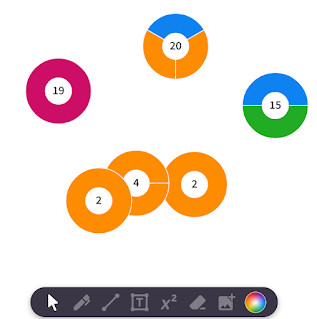
These Prime Factor Circles are a match to Prime Climb and can be decomposed (if composite) or combined as you wish to create new products.


This is just the tip of the iceberg in this fabulous site.  You can save and link activities that you make within the Polypad, but you can also use some of the many that are already prepared.  One last thing to explore is the Lessons tab.  Inside of there you will find your way to a variety of puzzles and explorations for you and your students.

Take the time for your students and yourself to explore this site.  You won't be disappointed!


Thursday, October 13, 2022

Building Math Culture

 I often talk to teachers about the importance of building a learning culture in their classrooms.  It is so important that students feel safe and valued in their learning ideas.

Recently, I came upon this website, which gives tips and has videos to guide teachers and families in promoting a growth mindset in students.  I especially liked  the examples within the section on Celebrating Mistakes.

It reminded me of a teacher I recently listened to excitedly explain the building of culture in her classroom.  She talked about how she and her students cheer for each other's  mistakes, how students grow in their ability to talk about math through the constant exposure to thinking problems, and how her students love math time in the classroom.  There was no doubt that this excited teacher was talking from the positive experiences happening in her room, and that her students, too, had wonderful experiences as growing mathematicians!

Everyone in the room could feel the joy that this teacher exuded, and I'm sure, like me, they were wishing to have students (or be a student) who were a part of this classroom.  As students grow and content becomes more and more, I think teachers find it more difficult to create this type of atmosphere, but by visiting the website, teachers might find just the motivation to build a stronger classroom learning culture. Even in October it is not too late!


Tuesday, April 26, 2022

We are all math people!

Slowly, I am beginning to notice the phrase "math person" disappearing, and I am thrilled!  We are all math people. It is not a subject for the elite--all of our lives involve math.

As is often said, people rarely go around and say, "I can't read," yet they have no issues with stating that they can't do math. I believe that people say this because they limit their definition of math. Math is such an important piece of our everyday lives. 

Math is about way more than just computing.  It is about logic and thinking and patterns. It is about shapes and sounds and data. It is about puzzles and perseverance.  It is something we can all do.  It is something that all of our students can do.  It is just how this looks that may vary.

Computers were created by great thinkers so that we do not need to spend all of our time completing computation problems.  The part that we need to do (and our students need to do) is think about the math: What does this data tell us?  How can we use this data?  What do I need to do with these numbers? Which fraction is bigger? What fraction is smaller? What discount is better? Which measuring cup can I use when I can't find my half cup? About how much money will I need?  How is symmetry used in art? How does logic help me solve a Wordle?   This is real world math. This is math that matters to us.  Knowing that 7 x 9 is 63 is an important fact for sure, but it will only be relevant to a person as they age if it is necessary as part of their daily activities.  Many carpenters know their 12s times tables for this reason.

So many other beautiful things that we do and experience daily involve math like baking, building, music, and art. Once we expand our thinking around the definition, we will see that we are all math people.


A t-shirt that I have seen many times says this:

HOW TO BE A MATH PERSON:

1.  Do math. (any type)

2. Be a person.

Monday, January 31, 2022

The Value of Routines

Classrooms with strong routines reap many benefits.  This has become very evident this year as i have seen so many more classrooms begin math instruction each day with a routine.

In this year of continued chaos caused by the pandemic, teachers are finding that through routines, they can reinforce and review skills from previous grades.  They are also able to use routines to preview skills that might not be coming until later in the year.  So many free, well-designed routines are out there for teachers to use that it is easier than ever to find one that meets our students' needs.

Low-floor, high-ceiling routines are wonderful for engaging all students, and they usually involve a visual that helps students to all be able to "step-in" to the learning.  Favorite examples of these types of routines include Which One Doesn't Belong and Same/Different.  Teachers and students alike enjoy these routines because there are so many possibilities within one routine as they allow students to make sense of the problems in ways that make sense to them.

Many of the routines from Steve Wyborney are also loved by teachers and students.  These routines contain visuals, offer great exposure to vocabulary, and build number sense.  Teachers love them because they are professionally made and easy to use, and students love them because they are fun!  

Of course, Number Talks also are a routine that helps to build student discourse and fluency.  Using the book as a guide for these helps students to develop and use strategies when they are ready.  Doing Number Talks regularly has been shown to grow student fluency and flexibility in computation.

As students become more familiar with routines, there are many ways teachers can tweak the format.  For example, they might decide to have students create their own following a favorite routine.  (Creating your own Which One Doesn't Belong isn't as easy it might seem.)  Students can create these routines and share them with other classrooms besides their own giving them a larger audience for their work.  Teachers might also use routines as a daily warmup such as revealing one clue a day to an Estimystery and then discussing the students' thinking at the end of the week.  I've even seen teacher print out images from routines and have students discuss them as they wait outside of a special class like PE or music.  A routine image might be part of a weekly newsletter so that families can discuss it together.   There are many ways that these routines can be used throughout a day's learning in addition to a warmup for math block.

All of these math class routines help to build a strong classroom culture of open, flexible thinking.  They also strengthen students' number sense and confidence while expanding their math vocabulary.  Teachers gain better insight to student development and can use these routines to help determine what next steps to take instructionally. They see quickly how students grow through the use of routines that meet their student needs; the routines may change from year to year.  

Math routines help us to build mathematicians whose confidence help them to take on the math practice standards as part of who they are. 


Monday, May 10, 2021

Best Practices: Where can you grow?

 It has been a crazy, stressful year.  The good news is that the end is in sight for this school year.  And, while we may still live with some restrictions when our new year arrives next fall, we anticipate that many things will return to a more typical format for instruction.

So--let's look with next year in sight.  I know your summer is looking promising.  You can't wait to just relax and enjoy all that the world has to offer without the weight of instruction on your mind.  However--I imagine, like me, you find it difficult to totally turn off school.  Here are some things you might consider looking into to grow as a math teacher for next year.  Think about these best practices.  Which ones seem reasonable for you as you continue on your math journey?  You might choose two; you might choose seven.  Do what works for you.


Daily Routines:  Using the beginning moments of your workshop to get everyone thinking around an interesting problem is a great way to get the juices flowing!  I would definitely include traditional number talks in these routines, but there are so many others to consider.  Look for low floor/high ceiling routines that allow all students to enter into the problem and encourage creativity and fun for all.


More Manipulatives:  CRA Instruction "puts math in students' hands so they can understand it with their heads."  All students benefit from this type of instruction, but sadly, we tend to move away from it too quickly. It is one of the best ways for students to gain conceptual understanding of concepts.

Numberless Word Problems:  Key words are cancelled.  They are not a good instructional practice because they do not encourage good thinking from our students.  Taking some time to think around word problems that do not have numbers is a fabulous strategy for our students.  It not only shows the link between reading skills and math context, but it puts another tool in our students' toolboxes that they can use when they are confused by a word problem.  Remove the numbers!

Counting Collections:  The counting collections activity is way more complex than just counting, but it is also as simple as just counting.  The CGI approach is really working hard in this activity that I love to use from K to 5th!  (It could be used with older students, too!) It is an in-action practice of concrete, representational, and abstract.  This can be done by individuals or in pairs, but as always, the sharing at the end is where the real learning occurs!  You do not need anything fancy to count, so don't feel like this is something you have to go out and buy materials for.


More Visuals:  Math is visual.  Find ways to help students SEE the math in everything you do.  From representations during Number Talks to counting aloud visuals to the Same/Different routine to Prime Climb or Tiny Polka Dot, put the math out there in a way that students can engage with and understand.  Visuals help all students to engage and step-in to the lesson.


Three Act Tasks:  These offer such a good opportunity for our students to  make sense of math, and they do not follow the "I do, we do, you do" instructional format.  There are so many available to choose from.  The tab at the top of this blog is a rabbit hole that will take you to quite a few.  How can you be more intentional about using them next year?

Heterogeneous Grouping:  Tracking students is not an equitable practice.  All students need the opportunity to see and do high level tasks.  Let's not limit our students.  Be more intentional about grouping your students with students of varying strengths.  Don't underestimate what your students can do.

More Incorporation of Data:  Jo Boaler has added resources to her Youcubed website around data.  SlowRevealgraphs.com  has a number of prepared slide decks for many different levels.  These can be used in math class or incorporated into content areas.  Teaching our students how to read, question, interpret, and create various data representations is an important 21st century skill.

Desmos:  This platform offers so much for students, but also for teachers!  The platform is manageable and you can find a large number of ready-made activities that go beyond DOK 1 on this site.  I have many listed and aligned by standard in the Resources to support CCSS tab at the top of the page.

Weeks of Inspirational Math:  I have blogged about this more than a few times.  1st time   2nd time  3rd time  I love these!  I believe strongly you will, too, and so will your students.

Puzzles:  Our students do not have enough experience with persevering through challenging problems, and puzzles (both paper and tangible) give them experience with this skill.  Maybe you just add a jigsaw puzzle table next year, or maybe you take on KenKens--either way, your students will grow! (and probably have a little fun along the way)


Each year, we step into our classrooms with a fresh start and with plans of doing better than the year before.  By challenging yourself to grow in your math instruction, you will not only grow, but so will your students!  Good luck.


Monday, January 18, 2021

Removing Labels from Students

One thing that often challenges teachers is the way that they group students.  After working with students, they tend to have a group that they consider "low" and a group that they consider "high." Sometimes this designation comes as a result of testing.  This is an area where mindsets need to change.  When we think of students in these terms, we tend to determine their track and limit or expand our expectations--depending on the group.

I understand where this thinking comes from as it was taught to us as best practice for a while.  However, as Jo Boaler and other researchers point out, it is not what is in the best interests of our students as it pigeonholes them into believing that they are not good at math or that math should come easily to them.  Students who are consistently told that math comes easily to them often don't know what to do when it doesn't, and students who are led to believe that math is a struggle for them will want to avoid it because they are "no good" at it.  

So how do we correct this mindset?  There are a number of things that can be done.  First, we need to be very deliberate when referring to students.  We should work to no longer use terms like "high" or "low."  What I find is that most of our students have strengths and weaknesses.  Just because they have difficulty with computation doesn't mean that they don't have a great eye for geometric thinking.  

Secondly,  every effort should be made to not group our students every day by what we perceive to be their ability level.  Students should be heterogeneously grouped so that they can all benefit from hearing the ideas and thinking of others. (Imagine if your principal always grouped teachers according to the strong teachers and the weaker teachers.  How would the weaker teachers ever grow if they only had each other to get ideas from?  And how would the stronger teachers develop better understanding of their craft if they had no one to think deeply with? Everyone brings something to the table.)  Consider using visibly random grouping--an organizational structure researched, practiced, and  encouraged by Peter Liljedahl as helping students become better problem solvers.

Next, use low-floor/high ceiling problems as much as possible with your students.  From your opening routines to the rich tasks you ask your students to explore, find activities that all students can access and take to the level that they want.  These tasks encourage creative thinking and offer may opportunities for rich mathematical discourse.

Being intentional in making these changes will lead to greater learning from our students and improved equity for all.

Tuesday, December 8, 2020

How have you changed?

2020 has, in many ways, contained both stagnation and growth. The stagnation is what seems to resonate with us.  So much time at home, a limited circle of people to interact, and a school year that makes it challenging to see the desired growth in our students tend to overpower our thinking.  It is easy to focus on these things, as they are such a part of our daily lives right now.

However, there are also so many ways that we have grown in the last year. We have gained more time for self-reflection, had time to actually pursue our interests, become quite adept at Zoom meetings, and for many of us, learned how to celebrate holidays with a small circle rather than our large family gatherings.  While all of these opportunities have not been our choice, they have allowed us to look at our lives in a new light, and hopefully, there have been things we have done that we hope to continue well after this pandemic is in our rearview.

But as a math teacher, what changes have you made that you want to stick around?  Have you eliminated pages of repeated problems?  Have you put more time into the hows and whys of student work rather than the final results?  Has making math visual been a priority in your instruction? Have you been more intentional with your practices and built in routines that fit your students' needs?  Do your students see math as more than just computation? Have you offered more opportunities for creativity and critical thinking?  Does your classroom culture celebrate mistakes as steps toward growth?  

I am hopeful that some of these changes have occurred for you, and that you see the value in keeping these practices into the return of our post-pandemic world. While that world still may be many months away, these best practices are good now. Remote, hybird or in-person instruction.  Polish them up so that you have them in good shape for our return to "normal" instruction. Whenever (and whatever) that may be.  


Saturday, October 17, 2020

So much good in one place!


Many of you are familiar with the beauty of Splat! and all that it can offer our students.  It also has the great quality of being a routine that can be used throughout school.  It is certainly a routine that students, teachers, and this math specialist love due to its visual qualities, critical thinking elements, and engaging ways!

But the master behind Splat! has many other great resources available to teachers.  They are opportunities to expose our students to many concepts and to encourage some rich discourse in our classrooms.  And, best of all, Steve Wyborney shares his wonderful creations with us in the form of free downloads.

These resources are good in a normal year, but this year, they are especially nice to use in a virtual learning format.

Here is a run-down of some of the things you can find from Mr. Wyborney:

Splat!:  Beginning with concept of missing addends, the Splat slides move from primary concepts to fractions and algebra as the slides become more complex.  Students benefit from the visual nature of the slides, and they love the game feel of it all.

Esti-Mysteries:  Another popular routine with students, esti-mysteries merge the skill of estimation with critical thinking.  One clue is revealed at a time so that students can narrow down their choices.  In the end, they still depend upon their estimating skills for a final decision.  One thing I like about this routine is that once it has been taught, I think it can be used in many ways including revealing a clue a day with the final discussion occurring at the end of the week.

Estimation Clipboard: This is one of my favorites!  This routine again builds off of the concept of estimating and makes it fun for students to take the risks when making an estimate.  An image is shown, students make an estimate, and then the answer is revealed. Another slide is shown with a change in the image, and the students adjust their estimate.  This simple routine has hidden sophistication in that it often has hidden benchmarks for students to use to be able to make a better estimate.  Many of the images are about number, but I especially recommend the slides that deal with length.

Cube Conversations:  These 3D images are a great way for students to get an introduction to volume and to build their visual and grouping skills.

Tiled Area Questions:  Beginning as general area problems, these develop into more complex relationships between whole and fractional numbers.  Again--an opportunity to stretch our students' thinking and their abilities to justify their thinking.

His animated multiplication chart is a nice tool for students to explore patterns and be exposed to their facts.

I know that for many of you Splat! is a common routine used in your classroom, but I wanted you to be aware of some of the many other treasures that you can find on this website.  If the past proves anything, I would bet we can look forward to other great ideas to be created by him in the future!  Have fun exploring this awesome sight, but more importantly, have fun watching your students think, engage, and discuss mathematics in such fun ways!

Thursday, September 17, 2020

Looking at Data

While the post title might lead you to believe that this post is about looking at student data, that is not the case in this situation.  Let's look at some resources for students looking at data!

Last fall, I met with some representatives of a major company in my community to discuss math education in our schools.  The number one take-away:  We want workers who know the answer to the question, "What does the data tell you?"  

It is common for teachers to present math pictures or problems to students and ask them "What do you notice? What do you wonder?"  But this post focuses on true data and how we can get students to look at it more thoughtfully, with the ultimate goal being that they can use the information to be better informed about the world around them.

Jo Boaler and youcubed have come up with data talk images!  Here is a link to their page of images (which I am sure will grow...)  Displaying these data images to students not only is great practice with graphs and infographics, but it also allows them to be better readers and understanders of data.  While these might make a great start to a math lesson, they can also be wonderfully embedded into content areas such as social studies and science--all with the simple questions, "What do you notice?"  "What do you wonder?"

Another resource that I often lead teachers to is numberless graphs.  Much like numberless word problems, numberless graphs force students to think and make relationships about the things they know from the graph while still missing key information.  Also much like a numberless word problem, the data is slowly revealed to them to help them make sense of it all in a thoughtful way.

No matter the grade you teach, what are you doing to engage your students in reading and understanding data?  Consider trying some of the links above, and watch the lightbulbs go off!

Friday, July 31, 2020

Here we go!

Tomorrow is August, and that typically means the beginning to a school year.  And Oh! what a school year it is to be.  Like one we have never experienced before.

As we think about our students, safety is our priority, of course.  However, we also must keep in mind learning--as that is the reason the new year begins.

Instead of getting caught up in the things that our students missed without in-school learning last spring, let's think about what we as teachers always have done; let's meet our students where they are and move them forward.  We don't have to worry about teaching a third of the content from the grade before us. Let's pick them up where they are and move them into new thinking, into new content.

2020 is one that will always be remembered, we know that.  Let's not burden our students by making them feel behind or like they aren't ready for their new grade.  Let's build them up, and build them into students with knowledge and understanding.  It is what is best, and it will relieve the pressure on them--and you. 

Good luck in 2020 whether it be in-person, online, or a little bit of both!


Friday, July 3, 2020

Individual student toolkits for CRA instruction


If students are in your classroom in August, it will be worth your time to have some sort of math tool kits prepared for your students because it is not recommended that students share resources, and you don't want to be cleaning them every night. What you are able to put in the kits will depend on your resources.  

We know that CRA instruction is vital for conceptual understanding of mathematical concepts.  Just because we will have some limits in place (for everyone's safety), doesn't mean we should abandon best practices.  We just need to adjust and do what we can for our students.

As I have said before, the use of virtual manipulatives will probably increase in your instruction even if you are seeing students in person.  This is especially true for those manipulatives where students usually need a lot of them to do their work--like pattern blocks and base ten blocks. I recommend that you use the virtual versions some in the classroom so that students are comfortable with the websites if they should need to use them from home without your direct support.

You might also consider paper versions of some of these tools to have in students's toolkits.  Not only can you get them easily and cheaply for the classroom, but you can also send them home if you need to without the worry of losing valuable manipulatives.

You may not start the year with all of the items in the toolkits.  You might add some as students are introduced to new concepts. Here are some things you might consider putting into individual toolkits for your students:

K:
hundred grid from nrich.maths.org
number path  1-20 by Berkeley Everett
ten counters (unifix cubes?)
rekenrek
real or paper pattern blocks by Mathwire
+/- Math Flips cards (+/- 1) by Berkeley Everett
Quantity Cards from Erickson Early Math Collaborative
pair of dice

1:
hundred grid from nrich.maths.org
number path  1-20 by Berkeley Everett
twenty counters (unifix cubes ?)
rekenrek
beaded number line
small clock face paper version
real or paper pattern blocks by Mathwire
pair of dice

2:
hundred grid from nrich.maths.org
number line 1-20 by Math Salamanders
twenty counters (cm cubes?)
rekenrek
beaded number line
small clock face   paper version
play coins, dollar bills
ruler
real or paper pattern blocks by Mathwire
real or paper base ten blocks from Tim Van de Vall
+/- Math Flips cards by Berkeley Everett (Doubles/Near Doubles) (make 10 with 2 addends)                        (make 10 with 3 addends) (2 digit + 1 digit) (2 digit + 2 digit) (subtraction within 20) (subtraction within 100)                                                                       
pair of dice

3:
twenty or more counters (cm cubes?)
beaded number line
small clock face   paper version
play coins, dollar bills
ruler
10 x 10 array (laminate)
real or paper pattern blocks by Mathwire
real or paper base ten blocks from Tim Van de Vall
paper Fraction Strip  from Math Salamander (blank version)
paper Fraction Circle Pieces Page 1   Page 2  Page 3
+/- Math Flips cards by Berkeley Everett (if needed from previous grades)
 x Math Flips cards by Berkeley Everett (2s,5s, and 10s) (4s, 6s,& 8s) (3s & 6s) (9s & 4s)
pair of dice

4:
thirty-six counters (cm cubes?)
beaded number line
ruler
10 x 10 array (laminate)
real or paper pattern blocks by Mathwire
real or paper base ten blocks from Tim Van de Vall
paper Fraction Strip  from Math Salamander
paper Fraction Circle Pieces Page 1   Page 2  Page 3
+/- Math Flips cards by Berkeley Everett (if needed from previous grades)
 x Math Flips cards by Berkeley Everett
pair of dice

5:
thirty-six counters (cm cubes?)
beaded number line
ruler
real or paper pattern blocks by Mathwire
real or paper base ten blocks from Tim Van de Vall
paper Fraction strip from Math Salamander
paper Fraction Circle Pieces Page 1   Page 2  Page 3
Math Flips cards by Berkeley Everett (if needed from previous grades)
pair of dice

If you laminate many of the paper tools, students could use a dry erase marker to create representations.

What am I forgetting?


Sunday, May 17, 2020

Looking for Virtual Manipulatives?

While we are still unsure how our instruction will be delivered in the fall, there is one thing we are sure of....student's involvement in the concrete phase of learning math is important!

Sending home concrete manipulatives for all of our students may be too costly for most schools.  Purchasing enough to send home is not the only problem: we know it is doubtful that many of these tools will return to our buildings.  With that in mind, here I am going to highlight some of the best virtual manipulatives I have been able to find and use.

I highly recommend using these with students this fall even if we are face to face.  Allowing for guided use now will make it easier should they need to use them again at some point in the year.

I have always been a fan of Math Learning Center Apps, and I have shared these apps with many teachers before! These apps have always been free and easy to access and use.  Because of the pandemic's rise in at-home schooling, they have added an extra feature!  Sharing!  Four of the apps can be set and shared with students and/or students can share with you.  There is a video explaining how this works, and I have had success with it myself.  There are many great apps here.  Some of my favorites include the Number Rack, the Number Line, and the Partial Product Finder.  However, I can think of many great uses of the other apps.  I just have not used them myself in a classroom.
These are the apps that allow sharing at this time.
Toy Theater also has a great selection of virtual manipulatives. I do not have as much experience with these, but it has some great ones such as interactive hundreds and mulitiplication charts, a variety of counters, dice, and some graphing apps.  I think it could meet a lot of needs!
A great variety
Didax also has free online manipulatives. I have only found these while I've been sheltering at home, so I do not have experience in the classroom with them.  You'll find many that are available above, but here you will also find linking cubes and a math balance!  It also has algebra tiles and prime factor tiles that can be used in middle grades. (because manipulatives are just as important there!)

A few other places that you can find specialty links:
MathToybox has a Cuisenaire rods app.

ABCYa has some fraction tiles that are nice.
I hope you can take some time to explore these apps and find the ones that will work best for you and your students' needs!  It might be a good way to start the school year, whether we are virtual or in-person, to spend some time walking students through these tools, how to get to them, and how to use them.  That way, when the time arises, they will be able to use them more independently!  Remind them that they can use them and explore with them whenever they want.  Exploring these tools independently helps students to see relationships and make sense of it all on their own.

The other thing that is great about these virtual tools is that you can use them to create your visuals for your SMART docs, Google slides, or student tasks.  Math is visual, and these provide us with good ways to show the math to our students.

I hope we have the chance to use concrete manipulatives in August with our students, but now is the time to prepare in case we don't.  I hope you can find tools at some of these sites that match the ones your students typically use in the classroom.