Tuesday, December 19, 2017

Math Talk: Another way to encourage it!

I am always looking for new ways to engage students in math talk.  Math talk is such a powerful tool for building student understanding!

A website I recently found offers some great discussion starters that could be used in a variety of ways in your classroom.  Same but Different Math offers your students images to compare and contrast. These images are categorized to improve your search for what you need.

Let me know what you think about this site or if you would like my help in implementing its images in your classroom!


Tuesday, December 12, 2017

Goal for 2018: Modeling a Growth Mindset in Math

Jo Boaler is an educator at Stanford who has done much research and writing about math education.  She has worked closely with Carol Dweck to provide us with books, videos, activities and resources to help us encourage a growth mindset for our students. If you are looking for some professional reading, I would recommend looking at some of her books.

Her website is youcubed.org.  I use it a lot when searching for rich problem-solving activities.  When speaking about growth in math, she stresses the importance of visualization.  From her site, you can download some posters that show students the value of training our brains as mathematicians.  


If you are interested in books to use during your workshop that encourage growth mindset, you might be able to find one here or here.

Do you have any tools that you use to build growth mindset?  Share in the comments below!

Monday, December 4, 2017

Math Maven's Mysteries

It always amazes me the free things that I find out there on the internet...

Link to Scholastic's Math Maven's index page


This site from Scholastic offers interactive math mysteries of all levels and on a variety of math topics.  They would be great to use as a small group activity or a problem-solving station during workshop.  It offers many great resources.  Many of the problems are ready for the SMARTBoard, there is the opportunity for the story problem to be read to the students, the teacher's resource has many supplemental activities, and you can print out paper copies for students as well!  The main page provides links to all of these options.  I hope you can find something that will fit your classroom!


Wednesday, November 29, 2017

Holiday Math Online Games

Here some holiday/winter based online math games you might want to try:


Christmas Math:  (K-2)  This site works on identification of numbers, counting, as well as facts within 20.


Math Mosaics: (K-2)  Children solve problems under 10 to color in the squares of the winter mosaic.


Holiday Fun:  (3-5) A multiplication practice game.  Students can choose fact family they want to practice.  Correct answers create a holiday scene.


Blocky Christmas:  (3-5) Logic puzzle from ABCya


Christmas Lights:  (K-5)--Students select the difficulty of basic facts to practice.  They are rewarded at the end with lights to decorate the holiday scene. Students love ABCya!


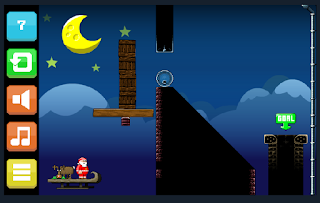
Super Santa Kicker: (K-5) Students use their knowledge of angles and simple machines to help the reindeer kick the stuffed Santas into the goal.


Winter Math MunchMan: (K-5) Students can choose what level of problems that they want to solve.  Then they move through the Pacman maze to capture the answers and beat the ghosts.


Create your Own Snowflake:  (K-5) Students use digital scissors and paper to create a symmetrical snowflake.

Snowline:  (K-5) Students use angles to direct Santa to the finish line.


Winter Jigsaw Puzzles:  Students put together digital jigsaw puzzles.


Monday, November 27, 2017

DIfferentiating with Fractions


Differentiation can be a challenge. And a lot of work.  Over time, however, I have learned that it doesn't mean that I have to have 3 or 4 different lessons over different content.  In fact, we are encouraged to extend the lesson rather than teach a different lesson.  Below is an example of what I did with Mrs. Bainbridge's fraction kite idea.


I love to color and have lots of those cool design books. I took those design books and used them to design my kites.  The simpler kite ( top design) is made up of 100 equal pieces, and the students had to use 6 different colors.  The more complicated kite did not have equal pieces.  Using the smaller size as a unit, the kite had 650 pieces.  Students then had to use at least 4 different colors for their design, and then had to count and convert the big pieces into small pieces.

Here are examples of what the grids looked like:


The students received a kite shape already made out of these patterns, and they were told how many equal parts there were.  The kids had fun, and it was an appropriate challenge for those kids who needed it.  When the students were done writing their fractions under the kite, they had to check their work by adding the numerators of each fraction to be sure it equaled the appropriate denominator (100 or 650).  Maybe you make kites, or maybe you decide to make holiday ornaments or something else that matters to your class--the idea stays the same.

I have also used Mary from Pitner's Potpourri idea.  We looked at Ed Emberley's Picture Pie and created our own picture pie.  Differentiation was natural on this one.  Certain kids were told they must use 4ths and 8ths in a certain number of colors while others just used 4ths.  The artwork created was fun and beautiful!


Monday, November 20, 2017

Place Value People

As part of a study of place value, I often do a kinesthetic activity which seems to help everyone "get it" a little better.  

I have digits written on construction paper and laminated:  One number per piece of construction paper.  I also have a piece with a comma that says thousand, a comma that says million, and a decimal point that says and.  

I pass out the digits, commas, and decimal point randomly to students.  Then I make up a number and tell the class.  As I say the number, students with corresponding digits go to the front of the room to make the number. They line up and form the number for us by holding the card in front of their chest so we can see it.  I usually let them collaborate some, but I really want them to do some independent thinking.  It helps me to see who is still struggling with the concept.  Once they think they are set, I have another student who didn't have a digit, read us the number. This is good practice for them as well.
After we are done with that number, students hand out their digits to classmates who don't have one, and we start the whole process all over again.


Sometimes, when they have the number made,  I will say "Let's reduce this number by 20,000."  (or something like that)  Then students have to figure out who is affected by this change and who would come take their place.  I begin this in our beginning stages of place value, but it is a great go-to throughout the year for review. Something to think about trying that gets kids up and moving!

Wednesday, November 15, 2017

Holiday Goodies

Every year the holidays seem to approach more quickly....it must be a sign of my age.  😏


I know how hectic the classroom can be as you prepare for the holidays...you are trying to finish up units, students are distracted, special events and assemblies get in the way, students leave for break a day or two early....

With that in mind, I prepared something for each grade level that I think can be used as independent work, partner work, or in another way that works best for you.  The 3rd, 4th, and 5th grade activities involve story problems which mostly align with the spring PARCC testing.  You should find that some of the pages are things that your students have already studied this year.  Of course, you might decide to look through one of the other grade level's sets of problems--as some of those pages might better fit the needs of your students.


If you are looking for other activities that might be good for your classroom during December, you might check out these previous posts: